
With contributions from Claudia Gualdi and Ramya DilipKumar
Across the globe, communities are grappling with the social, economic and cultural pressures of tourism and migration. From the streets of Barcelona to the rallies in Australia and South Korea, residents are increasingly voicing concerns about overcrowding, housing shortages and the strain on local infrastructure and services. While travel and migration bring economic benefits, these recent events highlight the growing tensions that arise when growth outpaces the capacity of cities and countries to manage it sustainably.
The strain of overtourism in Europe
According to the UN World Tourism Organization, Europe welcomed 747 million international visitors in 2024, with over 70% concentrated in Southern and Western Europe. This heavy concentration has intensified pressures on housing, infrastructure and daily life in popular destinations, such as Barcelona. The city, home to 1.6 million residents, receives around 32 million visitors annually.
On World Tourism Day, 27 September 2025, anti-tourism activists staged protests at Parc Güell and other landmarks, spraying tourists with water pistols, displaying banners reading “mass tourism kills the city”, and chanting “tourists go home”. Campaigners highlighted the impact of short-term rentals on housing affordability, rising rents and overcrowded public spaces. In response, city authorities plan to revoke licences for roughly 10,000 short-stay apartments by 2028, while other municipalities across Spain are considering or implementing tourist taxes to manage visitor impact and fund local services.
The protests reflect broader public concern about overtourism rather than tourism itself. Demonstrators call for more sustainable models that prioritise “quality over quantity,” encourage longer stays, spread visitors beyond saturated hotspots and impose stricter controls on irregular accommodation.
March for Australia
While Europe grapples with overtourism, other regions face similar tensions with migration, such as Australia. On 31 August, more than 52,000 people joined the “March for Australia” rallies in Sydney, Melbourne, Adelaide, Canberra, Perth and Brisbane. Participants blamed record migration for escalating housing shortages and higher living expenses. The events were the largest anti-immigration demonstrations in Australia’s history, even though nearly a third of the population was born overseas.
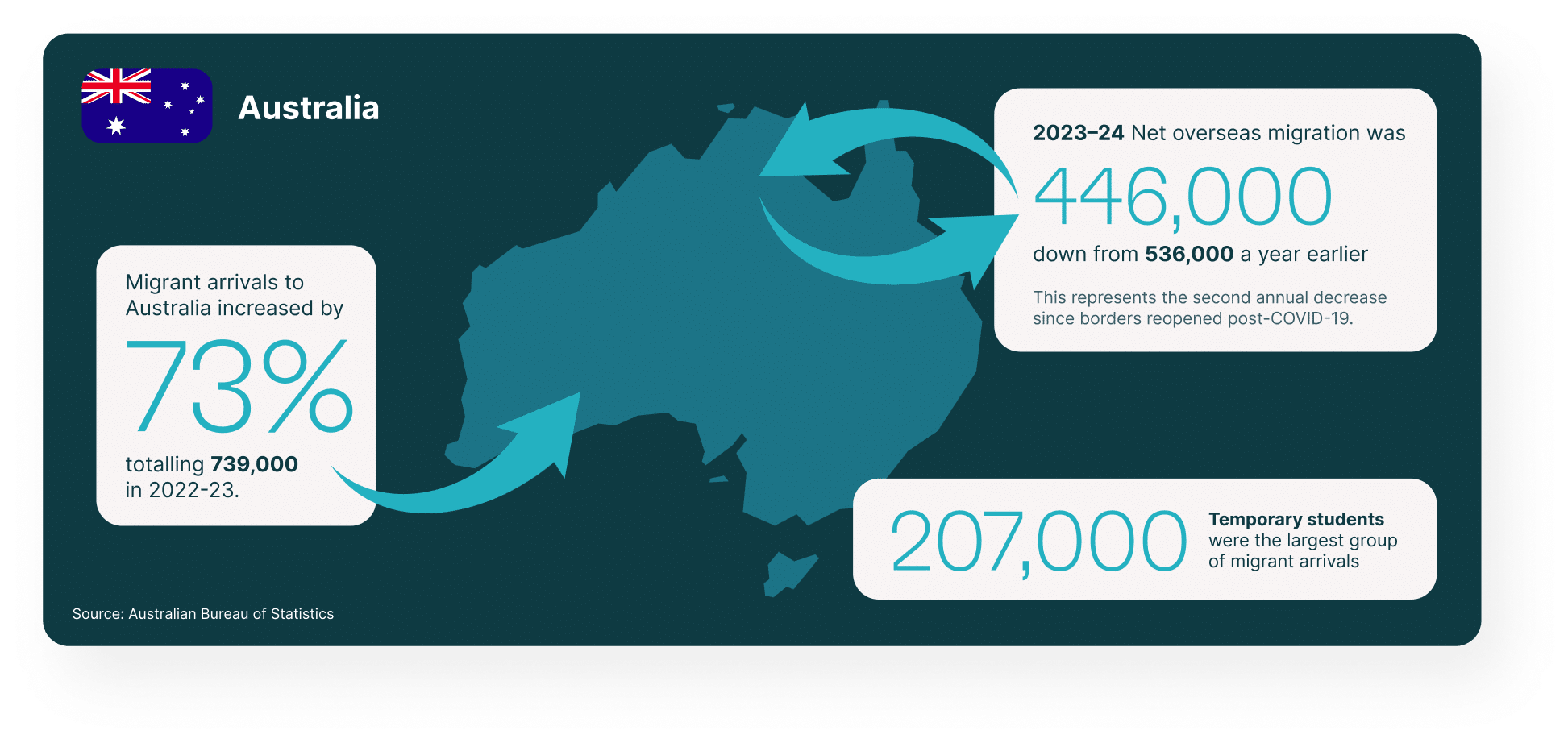
Far-right activists, including neo-Nazi groups, were also present. They demanded the removal of non-European migrants and circulated misleading figures, such as claims of 1,500 newcomers per day. Official statistics show 446,000 arrivals in 2023–24, mainly from the UK, India, China and New Zealand, with most holding student or skilled-worker visas.
Housing pressures are acute. Prices have climbed nearly 40 percent in five years, while one in three people surveyed by the Salvation Army in 2024 said they had fallen behind on rent or mortgage payments.
Further mobilisations are expected. Nationwide rallies on 13 September underlined the movement’s growing momentum.
Rising anti-China sentiment in South Korea
South Korea has seen a sharp increase in anti-China protests following the government’s decision to allow visa-free entry for Chinese tour groups in September 2025. While the policy was intended to boost tourism and consumption, it has fuelled nationalist backlash.
Conservative groups have staged frequent rallies in Seoul’s Myeong-dong and in areas with large Chinese communities, sometimes directly confronting visitors. Police data shows protests surged from 20 in 2022 to 65 in 2025, with several restricted or banned due to concerns over public order.
The movement has also spread online, where far-right networks amplify conspiracy theories and exaggerated claims of “30 million Chinese tourists.” Authorities have vowed stricter measures against hate speech and violence, warning that harassment of visitors could harm Korea’s international reputation.
Balancing visitors, migration and community wellbeing
Addressing the pressures of tourism and migration requires a strategic, multi-layered approach that balances economic benefits with the needs of local communities. Cities can implement smarter visitor management, such as spreading tourist flows beyond overcrowded hotspots, promoting longer stays and regulating short-term rentals to protect housing stock. Governments should also invest in affordable housing and public services, ensuring that growth does not exacerbate social inequalities or drive residents out of their communities.
At the same time, fostering responsible behaviour among visitors and migrants is essential. Educational campaigns can highlight local customs, cultural norms and sustainable practices. Technology, such as data-driven monitoring of visitor numbers, can help authorities anticipate and mitigate pressures before they escalate. Engaging residents in decision-making and empowering civic groups to co-create solutions strengthens community resilience and trust.
Sustainable mobility is not only about limiting numbers but about creating systems where tourism and migration enhance, rather than strain, the places they touch. By combining regulation, education and inclusive planning, destinations can safeguard both the wellbeing of residents and the long-term vitality of their economies and cultures.