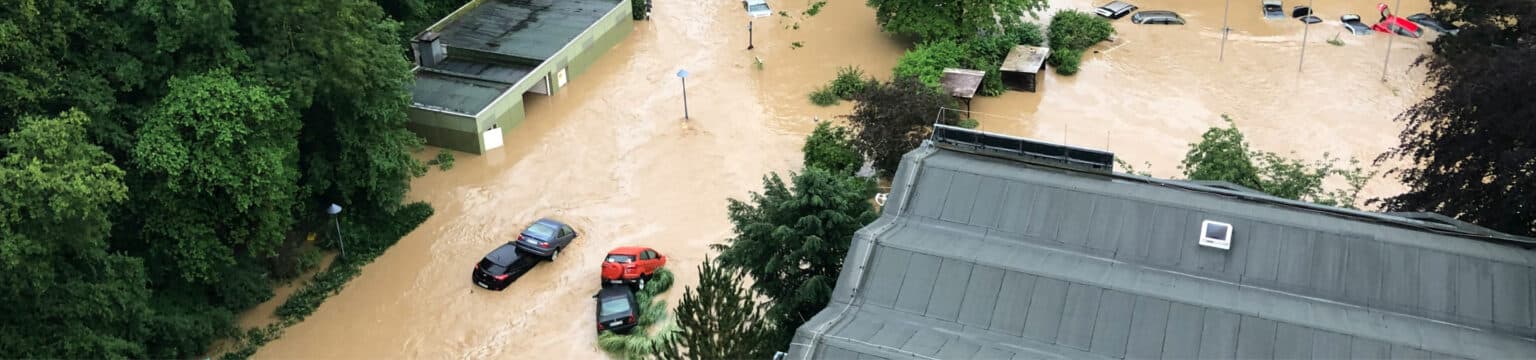
Ten months into 2026, flooding has continued to cause widespread disruption across the Americas (AMER), Europe, the Middle East and Africa (EMEA) and Asia-Pacific (APAC). From intense rainfall and flash floods in the Americas to severe storms across the Mediterranean and seasonal flooding in Asia, the impacts have extended across communities, infrastructure and transport networks.
Published: 13 July
Flooding travel 2026: While the causes and severity vary by region, the consequences for travellers and organisations are often similar. Road closures, cancelled flights, disrupted rail services and damage to essential infrastructure can significantly affect travel plans and business operations, with some disruptions lasting well beyond the initial flooding.
As 2026 enters its final months, seasonal rainfall and severe weather systems continue to pose challenges across several regions. This overview examines major flooding events across AMER, EMEA and APAC, their impact on travel and the importance of understanding and managing evolving flood risks.
EURO
N/A
EMEA
Europe: Severe Storms Continue to Strain the Tourist-Heavy Mediterranean
Amid intensifying global weather patterns, southern and western Europe experienced exceptional and often record-breaking rainfall across the start of 2026, thereby increasing incidents of flooding and heightening their impact. In mid-January, Storm Harry swept across the Mediterranean, causing widespread damage in several countries, including Italy and Malta. In Italy’s Sicily, the storm was believed to have caused over one billion dollars USD in damage as floodwaters inundated residences and businesses across the Ionian and Tyrrhenian coasts. Flooding also severely disrupted rail services across the island, while adverse weather conditions caused flight cancellations and diversions at Palermo (PMO/LICJ) Airport. The effects of flooding were further compounded by the effects of the storm more generally, as strong winds and landslides damaged port and road infrastructure.
In February, Storm Leonardo created similar challenges across the Iberian Peninsula. In Portugal, over 1,000 people were evacuated due to flooding across the country, primarily from Santarém, Lisbon and Faro districts, while power outages impacted tens of thousands of homes, many of which were still experiencing outages related to Storm Kristin in late January.
Rail services across the north of the country remained heavily disrupted for days following the passage of the storm as flooding and fallen trees scattered debris across the tracks. In Spain, over 11,000 people were evacuated across several provinces of Andalusia after areas such as Grazalema experienced the same amount of rain in 16 hours as the Community of Madrid receives in a year. In Córdoba, the increase in rainfall overwhelmed the Guadalquivir River and flooded areas along the riverbank, including Córdoba Airport (ODB/LEBA), where operations were suspended from 6 to 13 February, resuming on 14 February.
Since the start of the year, Riskline has provided real-time coverage for dozens of storms across Europe, with France receiving the 7th largest number of flood-related alerts globally. Such coverage is particularly essential across tourism-heavy Western Europe and the Mediterranean, where adverse weather events may potentially impact millions of travellers.
Flooding Continues to Exert a Heavy Human Toll across the Global South
Despite being largely dominated by arid climates, the Middle East and North Africa (MENA) has continued to experience deadly flooding across the past year. In Morocco, flash floods in Safikilled 37 people in December 2025, while further flooding in the northwest forced around 154,000 people to evacuate in February 2026. Other major cities across the North African coast, including Tunisia’s Tunis and Libya’s Benghazi, have also experienced significant disruptions as sudden downpours overwhelm drainage systems and disrupt power supplies. In March and April, sustained heavy rainfall resulted in weeks of flooding across low-lying areas of western Yemen, killing at least 24 people and displacing thousands. Further south, flooding and associated landslides killed an estimated 125 people and displaced 3,461 others in Ethiopia’s South Ethiopian region in March, straining already-stretched humanitarian infrastructure.
Sub-Saharan Africa experienced extensive flooding and cyclone-related impacts throughout the 2025–2026 rainy season, affecting millions. In Mozambique, flooding and other severe weather events during the October 2025–April 2026 rainy season resulted in 311 deaths. By early February, nearly 600,000 people had been affected and around 392,000 displaced, with Gaza province accounting for approximately 75% of those affected. From January to April, Riskline issued a travel risk advisory detailing the latest developments and urging travellers to reconsider travel to southern and central provinces. In March, at least 108 people were killed amid flooding across Kenya, including in Nairobi. Across southern Africa, heavy rainfall and cyclones from mid-December 2025 to February 2026 affected an estimated 1.5 million people, killed more than 300 and displaced over 170,000, primarily in Mozambique, Madagascar, South Africa and Zambia. In September, amid heightened flood and drought risks associated with strengthening El Niño conditions, Riskline advised caution when travelling across eastern and southern Africa, particularly Somalia, Ethiopia, Kenya, Zimbabwe, Mozambique and southern Zambia. Flooding also affected western African countries, including Senegal, Nigeria, Ghana and Côte d’Ivoire. Rapid urbanisation, inadequate drainage systems and the expansion of settlements into flood-prone areas have increased the vulnerability of urban communities to intense rainfall.
SSA
N/A
MENA
N/A
APAC
Many of the world’s most flood-affected countries are in the Asia-Pacific (APAC) region. In 2026, some of the worst-affected APAC countries included Nepal, China, Thailand, India, Pakistan and Afghanistan.
Nepal and China
Over 1,400 people were killed and 5,000 others remain missing, including hundreds of foreign nationals from Russia, India, Australia, the United Kingdom and the United States, across Bagmati, Gandaki and Lumbiniprovinces in Nepal since 26 August, when a glacial collapse triggered a series of major flash floods, primarily along the Bhote Koshi River. The nearby border areas of Gyirong county in Xizang (Tibet) region, China, were also affected, with at least 40 people killed and 500 others missing. Roads were made impassable, and power and communication outages continued in the areas for multiple weeks.
Elsewhere in China, at least 159 people were killed across Nanning and Guigang, Guangxi region, in early July due to flooding of the Pearl River basin after continuous days of heavy rainfall, following the passage of Typhoon Maysak. Earlier, about 82 people were killed across the country in May due to floods and landslides, triggered by continuous heavy rainfall, especially in the Yangtze drainage basin of Chongqing, and Hunan, Hubei and Guizhouprovinces.
Thailand
Severe flooding has affected Bangkok and 53 of Thailand’s 76 provinces since mid-September, resulting in at least 83 deaths as of 26 October. During the height of the flooding in Bangkok, many roads were impassable; flights and baggage services were delayed at Suvarnabhumi Airport (BKK/VTBS), as some staff were unable to reach the airport.
India
Like most years, many parts of India experienced heavy flooding due to the monsoon rains and low-pressure systems this season. Between June and August, Assam state experienced severe flooding that affected around 1.2 million people and left over 100 dead; many villages were completely submerged. Uttar Pradesh state received record-breaking downpours that killed at least 81 people and caused widespread damage. Odisha state witnessed large-scale evacuations amid deadly floods triggered by deep depressions from the Bay of Bengal. Several other places in the country were also struck by periods of flooding and landslides this year, including Mumbai and Delhi, as well as the states of Himachal Pradesh, Bihar and Mizoram.
Pakistan
Pakistan also witnessed flooding from heavy rainfall this monsoon season; most notably, this year saw the frequent flooding of the urban areas of Islamabad and Rawalpindi. At least 199 people were killed across the country in monsoon-related incidents, with Khyber Pakhtunkhwa province suffering the highest number of casualties. Other regions like Punjab and Azad Jammu and Kashmir also experienced damage and disruptions from flash floods.
Afghanistan
Afghanistan experienced highly destructive waves of flooding this year that killed at least 128 people and impacted over 92,000 people across all provinces. Around 40 people were killed and 100 others went missing in and around Parun, the capital of northeastern Nuristanprovince, after severe flash floods tore through the city on 20 July. Earlier in the year, flooding and landslides led to a high number of casualties and heavy damage across Kabul, Badghis, Panjshir, Nangarhar and other provinces.
Additionally, the El Niño system has complicated usual weather patterns globally, increasing the risk of extreme weather. Specific APAC regions, particularly southern China, the Yangtze River Basin, Sri Lanka and parts of East Asia, are prone to experiencing localised deluges in the coming months. Over the next 12 months, the at-risk places include southern and central China, Sri Lanka, Nauru (Naoero), Tuvalu, northern Tokelau, the Marquesas Islands of French Polynesia, and the Cook Islands, due to expected more-than-usual heavy rainfall from El Niño.
AMER
The Baseline We Inherited
Much of the damage that communities were still recovering from in 2026 dates to 2025.In the first half of that year, the United States experienced at least 14 billion-dollar weather and climate disasters, including severe flooding. Across all these disasters, damages exceeded US$85 billion, and 171 people died directly or indirectly. In March 2025, flooding in Peru and Ecuadoraffected more than 110,000 people, with widespread landslides and infrastructure damage. Later that year, October floods in Mexico killed 83 people, again compounded by landslides and damaged infrastructure.
North America: Flash Flooding Returns
The clearest North American event of 2026 came in July, whenrenewed flash flooding struck the Texas Hill Country. Steep terrain and thin soils funnel rainfall into rivers within minutes, leaving little time to react. At least two people died and more than 230 rescues were carried out. The death toll was far lower than in the worst events of recent years, but the strain on responders was considerable. The emergency also revived questions about warning systems, low-water crossings and the siting of seasonal accommodation.
The United States recorded the highest number of Riskline flood-related alerts this year.
South America: A Year-Round Workload
Brazil’s national monitoring centre shows how constant the demand has been.In July 2026, Cemaden recorded 157 disaster alerts and 77 events, and 69 percent of those events were hydrological, covering floods and flash floods. July falls outside the main rainy season in much of the country, which suggests flood risk in Brazil is a year-round operational concern rather than a seasonal one.
What the Year Has Shown
First, flash flooding remains a significant threat, as it can develop rapidly, leaving little time for warnings and emergency responses. Second, impacts are unevenly distributed: wealthier regions absorb enormous economic losses, while lower-income areas suffer greater human and developmental harm. Third, preparedness gains are real but fragile. Early warning systems like Cemaden’s save lives, but they depend on sustained investment, public trust and clear communication.
Our 2026 Coverage
Over the course of the year, we have tracked these developments through our alerts, advisories and related content, including a February advisory on flooding in Brazil’s Minas Gerais state and recovery efforts in parts of the Caribbean following Hurricane Melissa last year. These examples represent just a small part of Riskline’s broader coverage, helping travellers and organisations anticipate and respond to travel risks.
The Rest of 2026
The final months of the year will bring continued seasonal rains across much of Latin America, while the Atlantic hurricane season continues through November. Although El Niño has contributed to relatively subdued Atlantic hurricane activity in 2026, the risk of severe storms and flooding remains.
Stay informed
Floods can lead to disruptions of various kinds, with the primary issues stemming from movement restrictions and inaccessibility. Major roads and highways can become completely impassable, making it difficult for travellers to even reach airports or railway stations. Evacuations are often necessary during severe flooding, while communication and power outages are also common during adverse weather. Beyond travel disruptions, floods can devastate ecosystems, destroy livelihoods and harm local economies.
Despite the risks, there is still a high demand for travel to flood-affected regions worldwide; in some cases, travelling to these places becomes essential or unavoidable. Staying informed ahead of flood seasons is crucial to prevent these events from marring your travel plans.
There are several ways to remain updated; the best is to follow the latest information from reliable sources:
Government agencies, including national and regional weather agencies, their local equivalents, civil protection, national disaster authorities and municipal bodies.
Social media platforms like X (Twitter), Facebook and Instagram have also become a place to find the latest information and instructions, as the rapidity with which information is shared may be of crucial help in emergencies, for example, to learn hyper-local insights about roadblocks and service disruptions in real time. However, updates are not always reliable and verified, and some actors might take advantage of rapidly evolving crises to spread misinformation and misrepresent official instructions. It’s advisable to always verify updates via trusted sources.
Real-time updates, such as Riskline’s Alerts, deliver continuous, verified information about the rapidly evolving impact of floods in areas worldwide. They provide human-verified intelligence and practical advice, covering evacuations, shelter locations, mobility disruptions and other critical consequences.
Travellers should monitor the local situation in the lead-up to departure and throughout their trip. Additionally, they should have quick access to certain clear and accurate information, such as local emergency numbers, the locations and contact details of the nearest hospitals, and evacuation routes.
Travel Advice
Before, during and after your trip
Assess natural risk and the country’s response capabilities
Check whether your destination is vulnerable to seasonal flooding or other natural disasters. Check the conditions, availability, and response capabilities of the country’s emergency services.
Purchase travel insurance
Purchasing it before departure is always recommended, as several contingencies could impact your travel plans. If you are travelling to areas prone to seasonal flooding, make sure to have comprehensive travel insurance that covers cancellations and disruptions due to natural disasters.
Inform yourself about the coverage details of the travel insurance package. While some policies offer full coverage of the trip, others provide a refund or compensation only for trip delay or interruption. Some instead provide credits or vouchers for future travel. However, the possibility of receiving a refund or compensation may vary depending on the specific circumstances of the event and the policies of the travel providers involved. Some airlines might issue waivers allowing passengers whose trips were affected by flooding to reschedule their flights at no additional cost. For example, due to flooding in Nepal in August, Himalaya Airlines decided on this approach. Nevertheless, travellers should not rely on this possibility and should ensure their travel insurance covers flooding-related disruptions, subject to the policy’s terms and exclusions.
Contact all travel providers involved in your trip
If you booked your tickets through a travel agency, reach out to them directly. Additionally, contact hotels, car rental companies and any other service providers associated with your bookings to get the latest updates on cancellations or changes due to the flooding.
If facing a flooding event, seek higher ground and avoid floodwaters
If flooding threatens the area in which you are staying, avoid floodwaters by moving to a higher floor or higher ground, depending on the situation. Follow any evacuation instructions issued by local authorities. Floodwaters may contain hazardous debris and contaminants, such as electrical power lines, timber, metal or broken glass. The risk of exposure to venomous and non-venomous animals, such as snakes and insects, increases during flooding. Never attempt to drive through floodwaters. If floodwaters rise around your vehicle, abandon it and move to higher ground if it is safe to do so. If your vehicle is trapped in rapidly moving water, remain inside and call for help. If water rises inside the vehicle, climb onto the roof and signal for help.
If local authorities issue an evacuation order, leave the area immediately
Follow the recommended evacuation routes. Choose a direct route that leads away from flooding and avoid roads that are affected. Monitor official updates for changes in floodwater behaviour and evacuation instructions. In case of a natural disaster like flooding, travellers should carry a waterproof bag to keep passports, medication and other essential belongings together.
Keep your travel plans flexible
Be prepared to adjust your itinerary if local authorities issue evacuation orders or safety advisories, or if your transport is affected. Flooding often leads to road closures, flight delays and cancellations. Contact your embassy or consulate if you require assistance or have been advised to register your whereabouts.
Expect potential disruptions to telecommunications
In emergencies like flooding, communication networks can become overloaded or disrupted for several days. Damage to infrastructure from flooding, combined with increased data traffic in evacuation areas, may cause mobile network outages, resulting in delays or interruptions in receiving critical information.
Consider health risks after flooding
Flooding can contaminate water supplies with pathogens that cause diseases such as cholera, vibriosis, giardiasis, typhoid fever, hepatitis A, norovirus infection and leptospirosis. Standing water may also increase the risk of vector-borne diseases such as malaria, dengue fever and chikungunya.
Food and water in flooded areas may become contaminated and unsafe for consumption. To reduce your risk of travellers’ diarrhoea, pay particular attention to hand hygiene and safe preparation of available food. Vaccines are available for some of these diseases. Check which vaccinations are recommended for your destination and ensure you are up to date.
Contributors:
Americas (AMER): Diego Maloney, Marco Túlio Lara Asia-Pacific (APAC): Avantika Deb, Bumjoon Park Europe, Middle East and Africa (EMEA): Ryan Rogers, Sebran Evers Forterre Bruha Stay Informed / Travel Advice: Avantika Deb, Lorena Peña