Health

Flooding 2026 Health is not only a physical safety hazard. Its health consequences can begin immediately and continue for weeks or months after floodwaters recede. Contaminated water, damaged sanitation systems, disrupted healthcare services and changing environmental conditions can create complex public health risks for affected communities and travellers.

Published: 13 July

Some threats emerge immediately, as floodwater contaminated by sewage, chemicals or animal waste can increase exposure to infections and skin conditions. Others develop gradually. Standing water can create favourable breeding conditions for mosquitoes, increasing the risk of diseases such as dengue and malaria, while damp buildings and mould growth can aggravate respiratory conditions. Flooding can also disrupt access to healthcare, medicines and emergency services, particularly affecting people with existing medical conditions. Displacement, property loss and uncertainty may also have lasting psychological effects.

For travellers, preparation should therefore go beyond avoiding floodwaters. Checking recommended vaccinations, carrying sufficient medication, securing appropriate travel insurance and identifying local healthcare facilities are essential precautions. Staying informed about evolving health risks before, during and after flooding can help travellers make safer decisions and minimise potential disruptions.

EURO

Infectious disease risks

Severe flooding could trigger major outbreaks of certain illnesses by changing how people interact with contaminated water, animals and disease-carrying insects. Waterborne bacterial and viral infections, including cholera, dysentery, typhoid fever and hepatitis A or E, pose the most immediate threats to public health. These pathogens can spread through contaminated drinking water and cause different illnesses, including severe diarrhoea, dehydration and, in the case of hepatitis A and E, liver inflammation. Between 1 January and 15 February this year, cholera cases surged, with 4,320 cases and 56 deaths recorded after flooding events in southern African countries, namely Malawi, Mozambique, Namibia, Zambia and Zimbabwe. 

Similarly, leptospirosis poses a severe zoonotic bacterial threat in standing floodwaters. Transmitted through the urine of infected rodents and livestock, these harmful bacteria enter the human body through minor skin abrasions, eyes, or mucous membranes. Without prompt antibiotic treatment, severe leptospirosis can progress rapidly, leading to potentially life-threatening liver damage, internal bleeding, and acute kidney failure. In the Philippines, authorities recorded at least 13,158 leptospirosis cases as of 7 October 2026. Around 72 percent of cases recorded in Metro Manila are from flood-related exposure. At least 662 flooding events have been recorded across Metro Manila this year. More recently in Thailand, officials warned of a heightened risk of leptospirosis as flooding conditions persisted, with 3,303 leptospirosis cases and 46 deaths recorded since the start of the year.

As floodwaters recede, standing water may increase mosquito breeding, potentially raising the risk of vector-borne diseases such as dengue, malaria, West Nile virus and Zika virus. These mosquito-borne illnesses can cause high fevers, neurological complications and joint pain. An increase in mosquito-borne disease cases may occur several weeks after flooding, depending on local conditions. A dengue outbreak is worsening in Bangladesh, as officials recorded 81,598 dengue-related hospitalisations and 249 deaths as of 1 October 2026, with the month of September being the deadliest month this year. This outbreak may be exacerbated by the flash floods and heavy rain that killed at least 50 people and affected more than a million people during mid-July. In South America, Peru recorded 78,912 dengue cases as of 23 October 2026, with the worst-affected areas being Piura, La Libertad and Lambayeque departments, where flooding occurs.

Exposure to floodwaters may also cause skin conditions such as contact dermatitis, as well as bacterial and fungal infections such as ringworm. Finally, trapped indoor moisture could encourage rapid mould growth. Exposure to mould spores can aggravate existing respiratory conditions and trigger asthma symptoms, particularly in vulnerable populations.

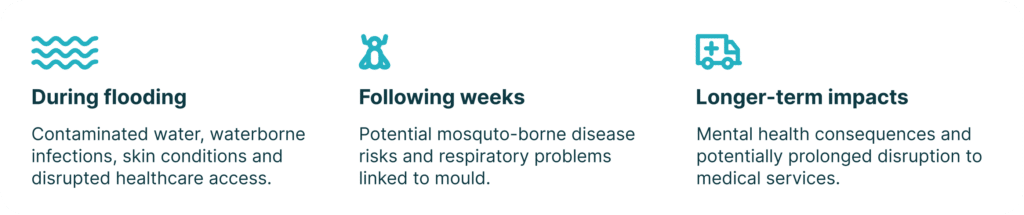
Flooding is not only a physical safety hazard. Its health consequences can begin immediately and continue for weeks or months after floodwaters recede.

How to avoid contracting diseases associated with floods?

Waterborne or foodborne diseases (cholera, dysentery, typhoid fever and hepatitis A or E)

  • After flooding, make sure that your water source is not contaminated and is safe for consumption. Monitor for updates and check with local officials to confirm that water sanitation infrastructure is not compromised. If tap water is visibly murky or authorities announce that consumption of tap water is unsafe, do not consume or use it. 
  • Stock an adequate supply of bottled water. 
  • Authorities may announce a boil water notice. Follow the directions of these notices thoroughly. Typically, these notices would instruct the public to bring water to a rolling boil for at least one minute. Boiling does not remove chemical contaminants, so travellers should use bottled water or another safe source if chemical contamination is suspected.
  • Maintain good personal hygiene practices, such as washing your hands with soap and safe water. Discard any food that may have come into contact with floodwaters.


Mosquito-borne diseases (
dengue, malaria, West Nile virus and Zika virus)

  • Travellers are advised to take measures to prevent mosquito bites such as wearing long sleeves and pants, applying insect repellent to exposed skin and clothing, and using a bed net when sleeping in a room that is not screened or air-conditioned.
  • Travellers should check destination-specific vaccination recommendations and consult a healthcare professional about malaria prevention medication where appropriate.


Skin diseases or cutaneous infections, as well as diseases that enter through skin or open wounds (
fungal infections, contact dermatitis and leptospirosis)

  • Stay out of floodwaters and mud whenever possible, especially when you have an open wound. 
  • If you must enter inundated areas, wear protective clothing or gear. Wear rubber boots and waterproof gloves. 
  • Change out of wet clothes and damp socks. Wash skin with soap after exposure to floodwaters.

Disruptions to healthcare, long-term health impacts and traveller preparedness

Major floods can place healthcare systems under significant pressure just as demand for medical assistance increases. Hospitals and clinics may be damaged, temporarily closed or difficult to reach because of inundated roads, disrupted public transport and power outages. Supply chains may also be affected, delaying access to medicines, vaccines, medical equipment and other essential supplies. Travellers who require ongoing treatment or prescription medication may therefore face additional challenges during prolonged flooding.

Before travelling to a flood-prone destination, travellers should ensure that routine and destination-specific vaccinations are up to date and carry sufficient supplies of essential medication. Comprehensive travel health insurance, including medical evacuation where appropriate, can provide additional protection if local healthcare services become inaccessible. Travellers should also research reputable hospitals and clinics at their destination in advance and keep emergency contact details readily available.

The health consequences of flooding can also continue long after waters recede. Beyond delayed outbreaks of infectious diseases, affected communities may experience prolonged psychological impacts following displacement, loss of homes or livelihoods, disruption to daily life and exposure to traumatic events. Anxiety, sleep problems and symptoms associated with post-traumatic stress may persist for weeks or months.

Following a major flood, travellers should closely monitor local health advisories, confirm that healthcare facilities remain operational and reconsider non-essential travel if access to reliable medical care is significantly disrupted.

Contributors:

Farhan Rafi, Lorenzo Trevisan

Editor:

Paul Mutter

Share

Destination Research

Destination risk, safety & travel reports

Travel Search

Visa, health, safety & documentation

TripReady

Pre-travel security & travel safety advisories

Realtime Alerts

Breaking on-site travel risk updates 24/7

Travel and Tech Data

Data to improve user satisfaction

Technology Solutions

APIs, widgets and portal

The Informer

Articles, news and product updates

Newsroom

The latest developments at Riskline

Resources

In-depth content on relevant topics

Thank you!

You are now subscribed to the Riskline Informer. 

Read the latest article now

Download the PDF