In a world marked by rapid change and uncertainty, organisations are constantly confronted with emerging risks that can disrupt operations, impact safety, and compromise business continuity. It’s essential to identify, assess, and respond to these risks before they escalate. A robust risk management approach anticipates potential threats and empowers companies with timely and actionable information they need to navigate these challenges. This proactive approach not only minimises exposure but also enhances resilience, enabling businesses to safeguard their people, assets and operations.
This article explores key strategies for staying ahead of emergent risks, highlighting tools such as notices for upcoming events, alerts for imminent risks, anticipatory advisories for seasonal threats, and real-time tracking of ongoing unrest and other crises. Through these methods, organisations can take a more anticipatory and informed approach to risk, fostering a more agile and secure operational environment.
Notices for Upcoming Events
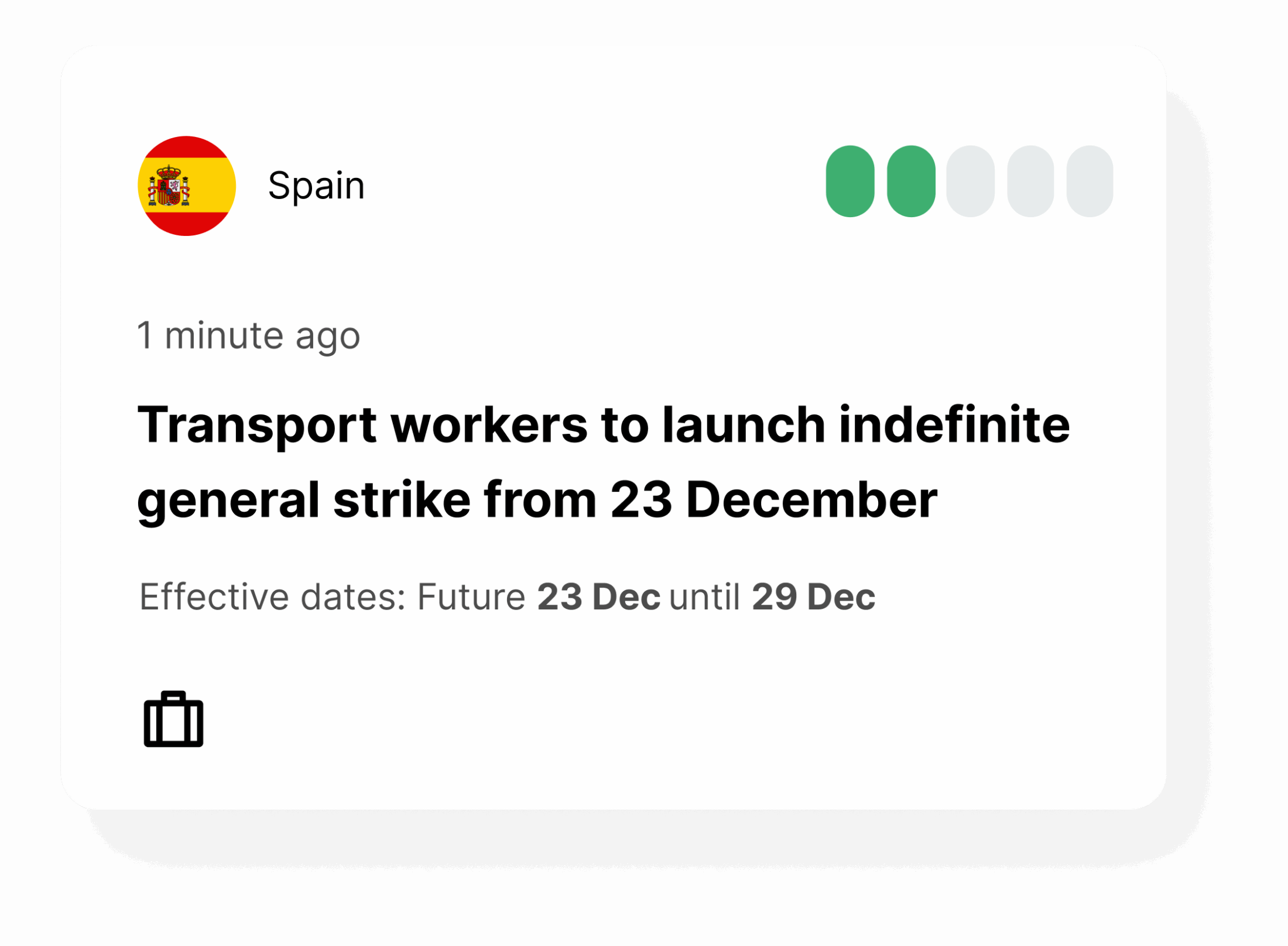
One of the core methods for staying ahead of risks is issuing notices for upcoming events. These notices are typically issued several months in advance, alerting stakeholders to risks that are on the horizon. Examples include elections, major political events, and large-scale public gatherings, where the potential for unrest or disruptions may arise.
Through advance warnings, organisations can ensure that their teams and clients are better prepared for potential issues. If an election is expected in a country where political violence is common, organisations can issue warnings to alert clients to the possibility of unrest and advise them on safety measures to take.
While the timing of these notices can sometimes be unpredictable, depending on when official dates are confirmed, it’s crucial to act as early as possible. In some cases, organisations may only receive confirmation of dates a few months ahead, making it difficult to issue comprehensive alerts on time. However, when these notifications are timely, they serve as an invaluable resource for planning and preparedness.
Alerts for More Immediate Risks
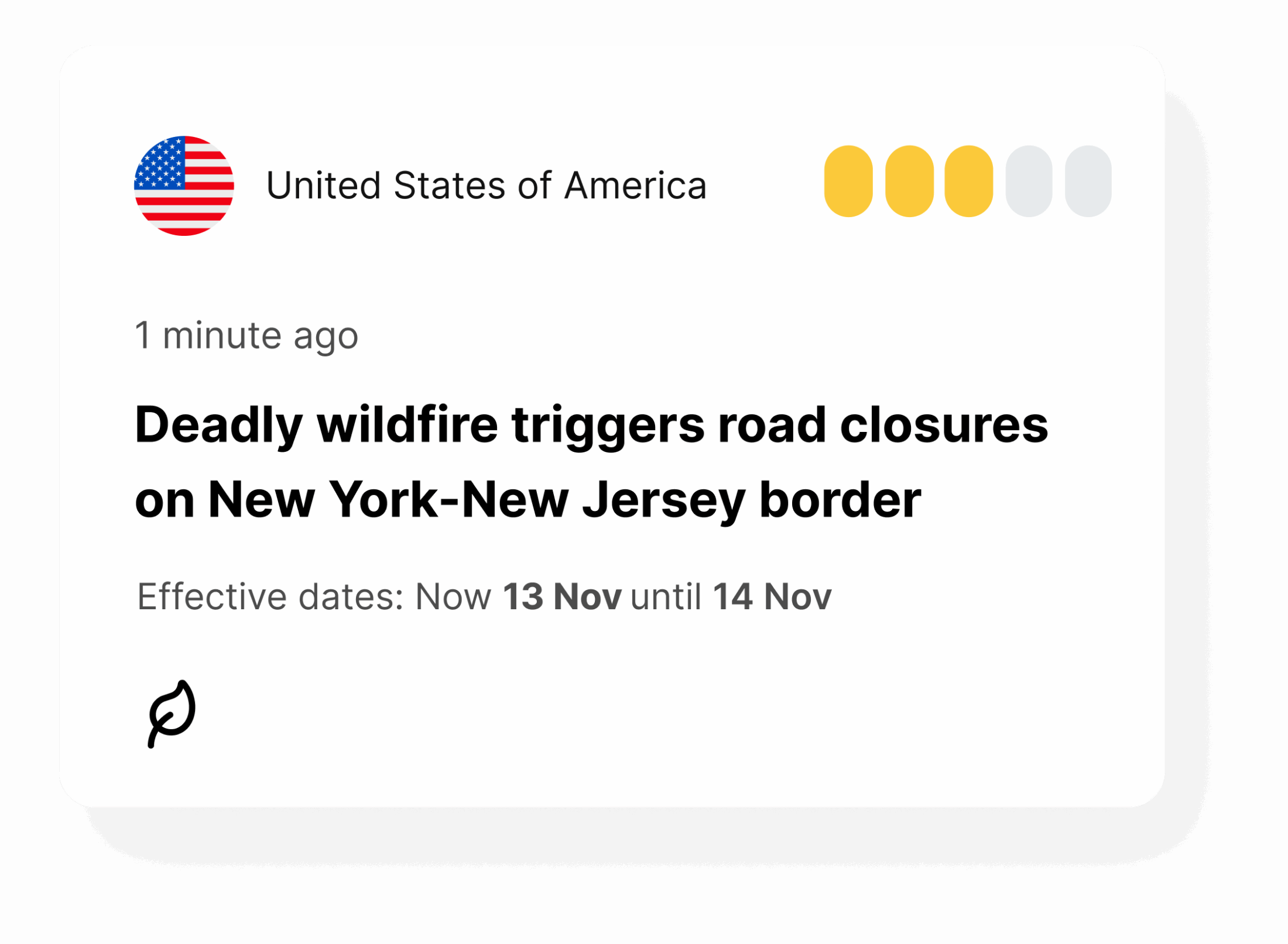
Alerts are an integral part of staying ahead of immediate risks. Unlike notices that offer advance warnings, alerts are typically issued during the time of an event. They address more immediate threats, such as weather disruptions, civil unrest or security incidents. They can be based on a variety of factors, including government advisories, weather forecasts, and real-time monitoring of unfolding events.
The key difference between notices and alerts lies in their immediacy and scope. While notices provide foresight, alerts focus on active risks that are already impacting operations or safety. For example, an alert might be issued if a hurricane is approaching or if a violent protest is disrupting public transportation. In such cases, timely alerts are critical to enabling rapid decision-making and mitigating potential risks to travellers.
Anticipatory Advisories for Seasonal Threats
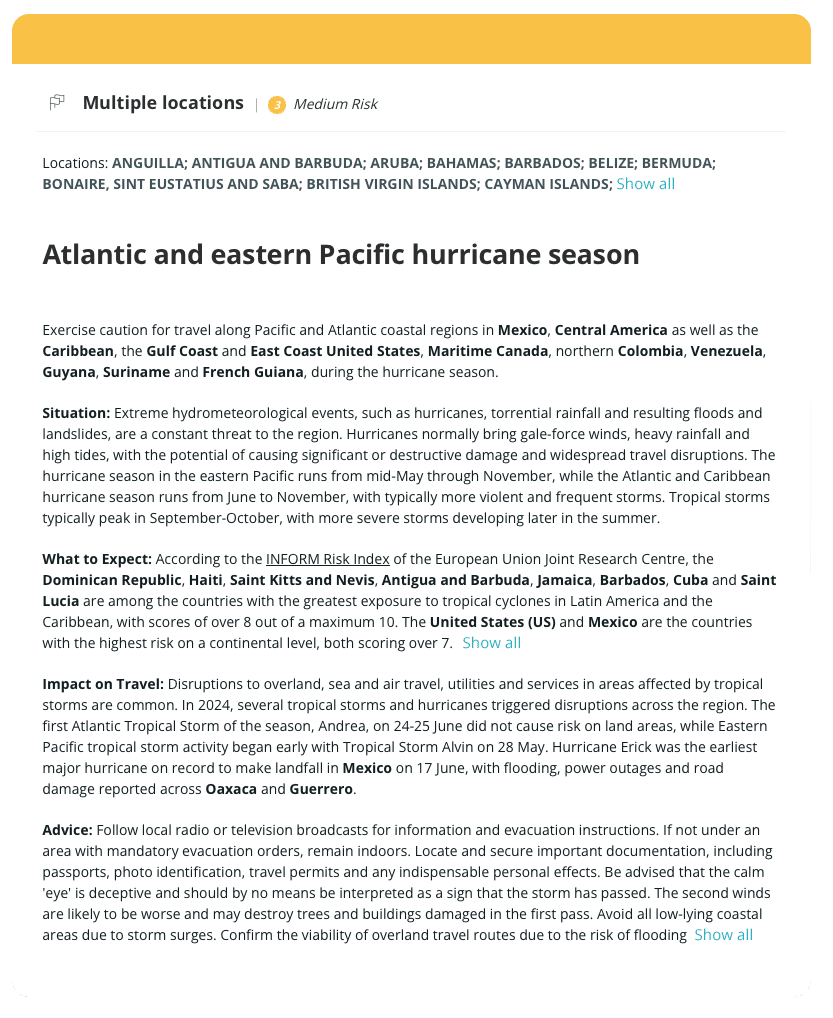
Certain risks, like seasonal weather events, are predictable. But they still need careful management. Anticipatory advisories help teams and clients prepare for these threats. They are issued ahead of events like floods, hurricanes, extreme weather, or disease outbreaks. The goal is to give timely information and clear guidance on how to prepare and reduce risks.
There may be a known risk of flooding in a particular region due to seasonal rainfall. In such cases, an anticipatory advisory can be issued. This can alert clients to potential flooding weeks or even months in advance. The advisories might include information on emergency evacuation routes, changes to local infrastructure and necessary precautions that need to be taken.
Seasonal threats can also include health risks, such as flu outbreaks or the spread of diseases. By staying ahead of these risks and issuing timely advisories, organisations can help their clients reduce exposure and avoid unnecessary disruptions.
Tracking and Monitoring Evolving Situations
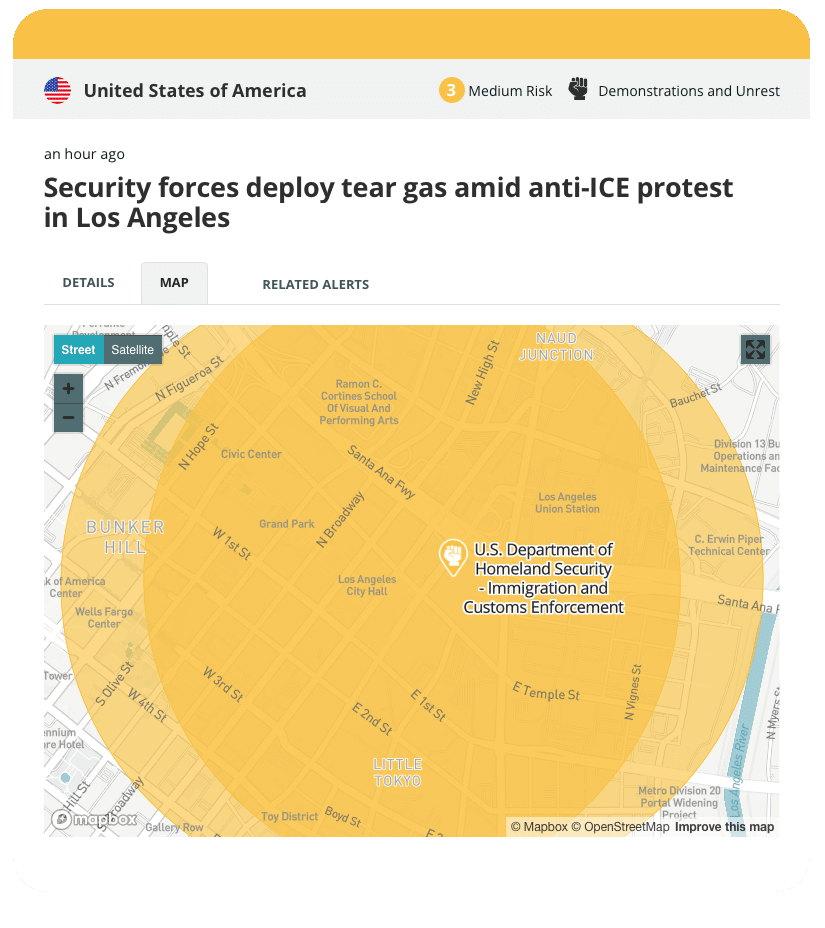
In addition to preparing for known risks, it’s equally important to continuously monitor ongoing unrest and evolving situations. Situations like protests, political instability and conflict can develop quickly, requiring constant vigilance to track developments and provide up-to-date information.
By tracking real-time developments, companies can issue critical updates and advisories. These help clients navigate the shifting landscape of evolving situations. For example, if a peaceful demonstration escalates into violence, real-time alerts will allow clients to adjust their travel plans or implement security measures. Similarly, monitoring ongoing unrest in a region provides valuable intelligence about whether the situation is likely to worsen, allowing organisations to take early preventative action.
In many cases, unrest may not be foreseeable, especially when it’s driven by rapidly changing political or social conditions. However, through advanced monitoring tools, it’s possible to identify early warning signs and issue/update alerts and advisories as the situation progresses.
The Role of Operations Teams in Risk Management
At Riskline, our operations teams play a central role in staying ahead of emergent risks. They are at the forefront of monitoring, analysing and communicating threats. To do this effectively, they rely on advanced tools and systems that track global risks and trigger timely alerts. These platforms help the team collect and analyse data, spot patterns and identify threats early.
Beyond tools, it’s also about people. Keeping the team informed and aligned is key. Regular briefings, training sessions and knowledge-sharing across departments ensure everyone understands the broader risk landscape. This builds a culture where proactive risk management is part of daily operations.