Europe
Europe’s wildfire season typically spans from June to September, with Mediterranean countries such as Spain, Portugal, Italy, Croatia, Greece and southern France facing the highest risks due to hot, dry conditions.
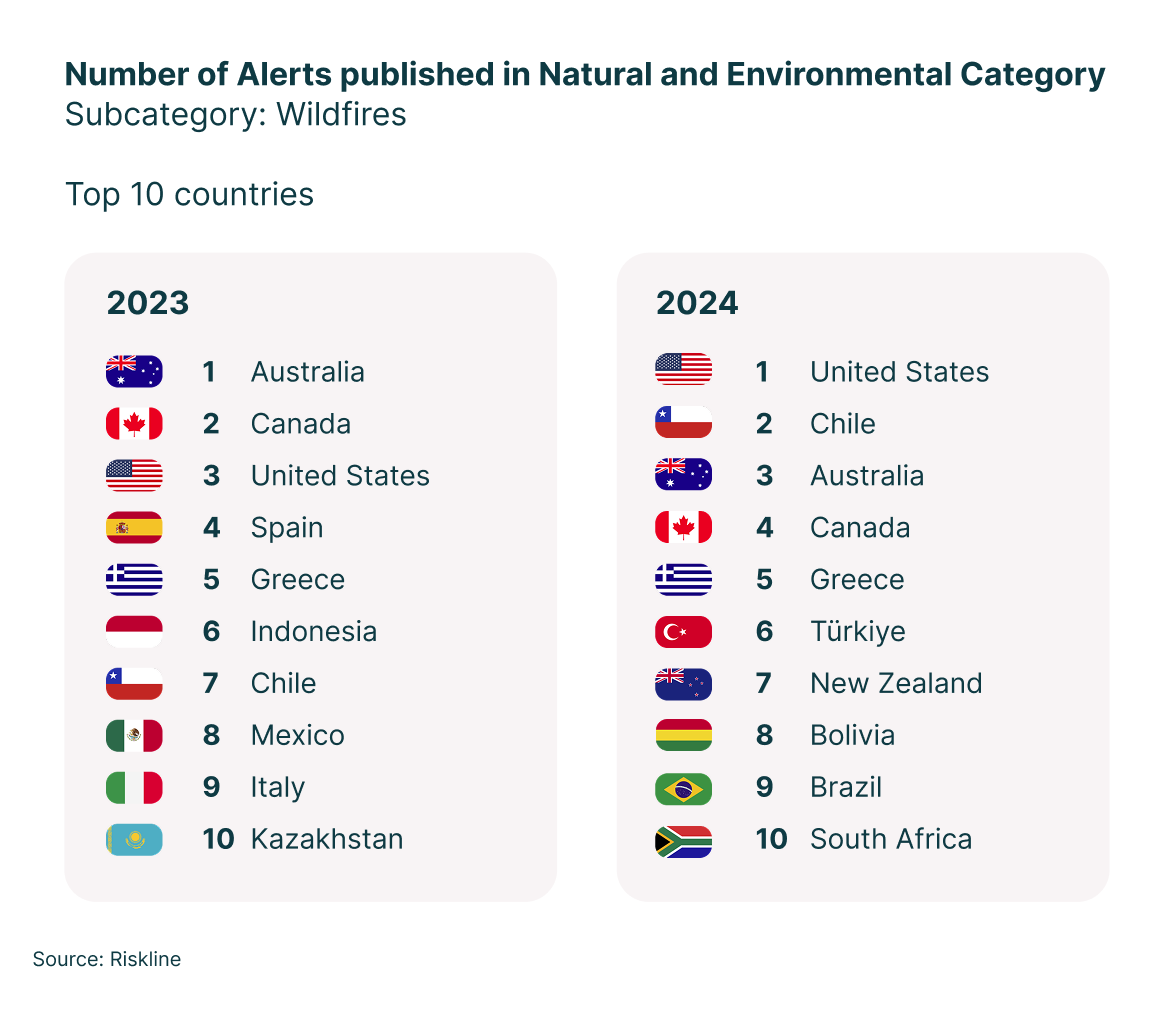
In 2023, Europe endured one of its most severe wildfire seasons, with over 500,000 hectares (1,235,525 acres) burned, ranking among the five worst years since 2000. In 2024, the first quarter saw nearly double the average number of fires compared to historical data, though the total burned area remained below average until mid-September, when Portugal experienced a surge in wildfires. Climate change, marked by prolonged heatwaves and droughts, has intensified wildfires, extending risks to northern Europe. For instance, the United Kingdom has already seen record-breaking wildfires in early 2025, with 30,000 hectares (74,131 acres) burned, exceeding its 2012–2024 average. Greece is preparing for a “troubling” 2025 season, mobilising over 18,000 firefighters and 3,700 vehicles, indicating heightened concern.
The summer of 2025 remains the peak wildfire risk period in Europe, especially across Mediterranean regions. While urban areas are generally less vulnerable, rural and forested zones remain highly susceptible. In September 2024, Portugal experienced severe wildfires, particularly in the Aveiro district. Thick smoke and active fires forced the closure of major highways, including the A1 motorway between Lisbon and Porto, as well as the A25 and A29. Rail services were also disrupted due to fires near the tracks, with heat and smoke posing safety hazards.
Air travel is especially sensitive to wildfire impacts, with smoke reducing visibility and nearby fires threatening operations. In August 2024, wildfires on the island of Madeira led to flight cancellations and delays at Funchal Cristiano Ronaldo Airport (FNC/LPMA). Urban areas are not immune, as shown by the August 2024 wildfires in northeastern Attica, Greece. Driven by strong winds and extreme heat, fires near Varnavas and Marathon forced the evacuation of several communities and destroyed hundreds of homes.
In addition to directly disrupting transport, wildfires can significantly impact travel infrastructure and disrupt travel plans. Crete and Rhodes, among other popular Greek summer destinations, remain at risk of severe wildfires, which have prompted mass evacuations of tourists in past summer seasons.
Travellers planning to visit Europe during the summer months should remain vigilant, especially when heading to rural or forested areas in Mediterranean countries. It is advisable to monitor local news and official advisories, such as those provided by the European Forest Fire Information System (EFFIS), have contingency plans in place and consider travel insurance that covers natural disasters to mitigate potential disruptions caused by wildfires.
Middle East
The Middle East experiences heightened wildfire risks from April to October, particularly in countries with forested areas or shrublands, such as Israel, Lebanon, Türkiye and parts of Iran and Syria. The 2023–2024 period saw a marked rise in wildfire activity across Iran, Iraq, the Levant and parts of the Arabian Peninsula, with satellite data indicating high anomalies in burnt areas. Türkiye and Lebanon experienced major forest fires in 2023, while Iran’s northern provinces continued to face recurring outbreaks.
In 2025, Israel faced one of its worst wildfire events in late April to early May, burning over 2,500 hectares (6,177 acres) near Jerusalem. The fires, fuelled by high temperatures and strong winds, prompted a national emergency declaration. Major routes, including Highway 1 (Jerusalem to Tel Aviv), were closed, with people abandoning cars and fleeing on foot, as rail services between Jerusalem and Modi’in and near Ashdod, were halted due to the proximity of fires, and at least nine communities were evacuated. Another fire broke out in the Ben Shemen Forest on 3 May 2025, indicating ongoing risks.
Travellers to the Middle East in 2025 should expect similar disruptions during the dry season, particularly in Israel and Türkiye, where forested areas are prone to fires. Monitoring transport updates and avoiding rural areas during peak risk periods is advisable.
Africa
Africa’s wildfire seasons vary significantly due to the continent’s climatic diversity. In sub-Saharan regions like Angola and the Democratic Republic of Congo (DRC), wildfires typically occur during the dry season, with timing varying by location. In South Africa, peak fire season is in spring (September to November), though agricultural fires are common during winter months (June to August). Neighbouring countries like Botswana follow similar patterns. In North African countries such as Algeria and Tunisia, summer heatwaves (June to August) heighten wildfire risks.
In 2025, Africa has faced a sharp rise in wildfires, fuelled by climate change, prolonged droughts and human activity, such as deforestation and land clearing. Cape Town’s Table Mountain National Park faced major wildfires in February and April. The February blaze, fuelled by strong winds, burned over 56 hectares (148 acres) within 24 hours. Kenya has recorded over 180 wildfire incidents since January, impacting critical ecosystems like the Mau, Aberdares and Mount Kenya forests. Fires have also erupted in Nairobi National Park, Ruma National Park and Mount Elgon National Park. Even the typically wet Congo Basin has seen wildfire activity double in recent years, a troubling sign of changing climate patterns.
Travellers to Africa should exercise caution by avoiding rural areas during dry seasons and checking local advisories for risk of fire, particularly in North African countries during summer. They should also be aware of health risks from wildfire smoke and potential disruptions to travel plans due to road closures or evacuations. Monitoring weather forecasts and staying informed about climate-driven fire risks can further ensure safe travel.