Health

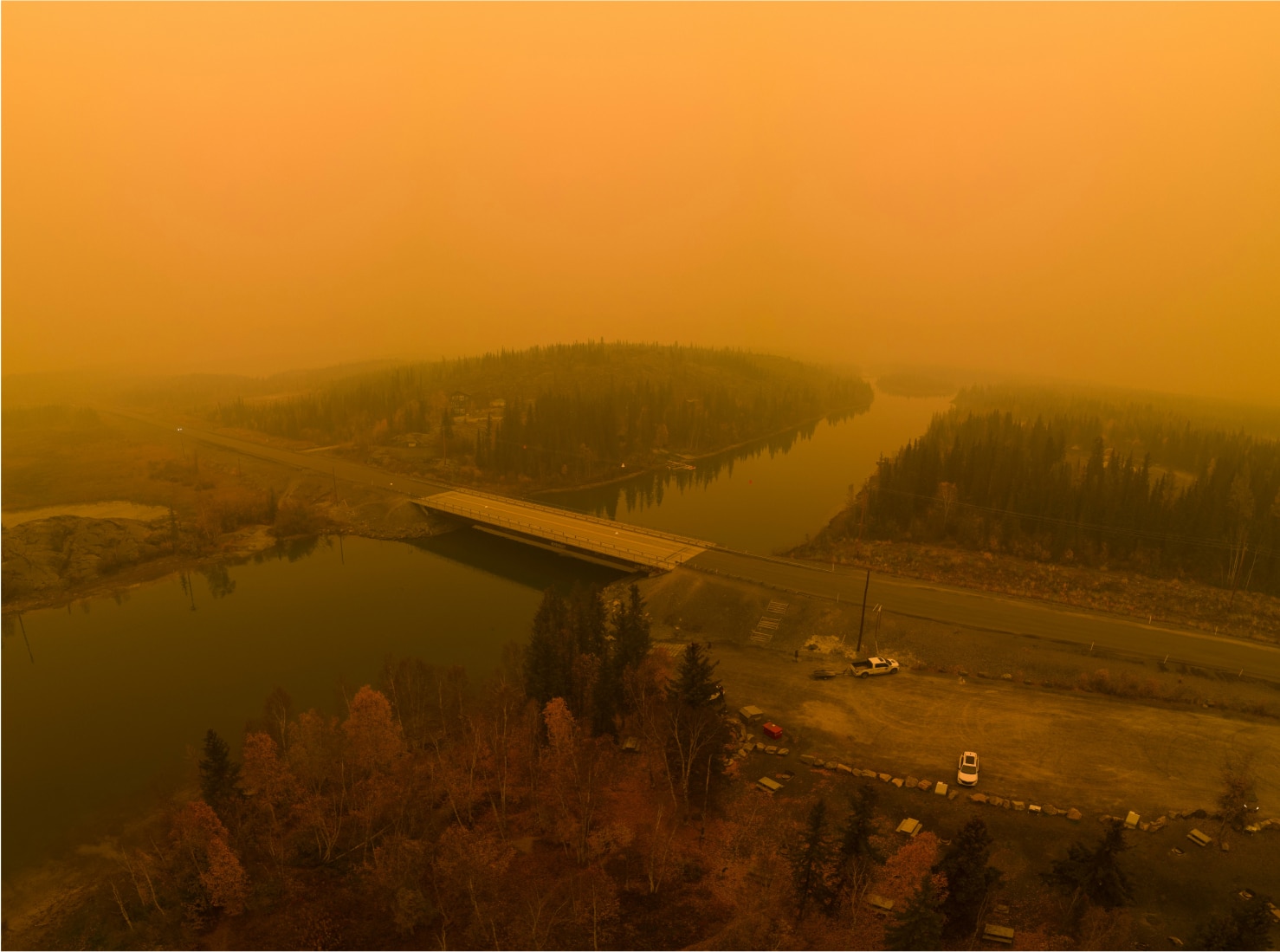
Wildfires present serious health hazards that go beyond the immediate threat of fire. Exposure to intense heat can cause burns, ranging from minor redness to severe, life-threatening injuries. Wildfires often coincide with heatwaves. This increases the risk of dehydration, heat exhaustion and heatstroke, particularly affecting those with pre-existing heart, lung or kidney problems.

Smoke from wildfires is a major health concern, carrying fine particulate matter and harmful gases. These gases can travel great distances and linger in the air for days. Breathing in this polluted air can irritate the eyes, nose and throat, worsen respiratory illnesses such as asthma, and raise the risk of cardiovascular problems. Vulnerable groups, including children, the elderly, pregnant women and those with chronic conditions, are especially at risk and should take precautions to reduce exposure.
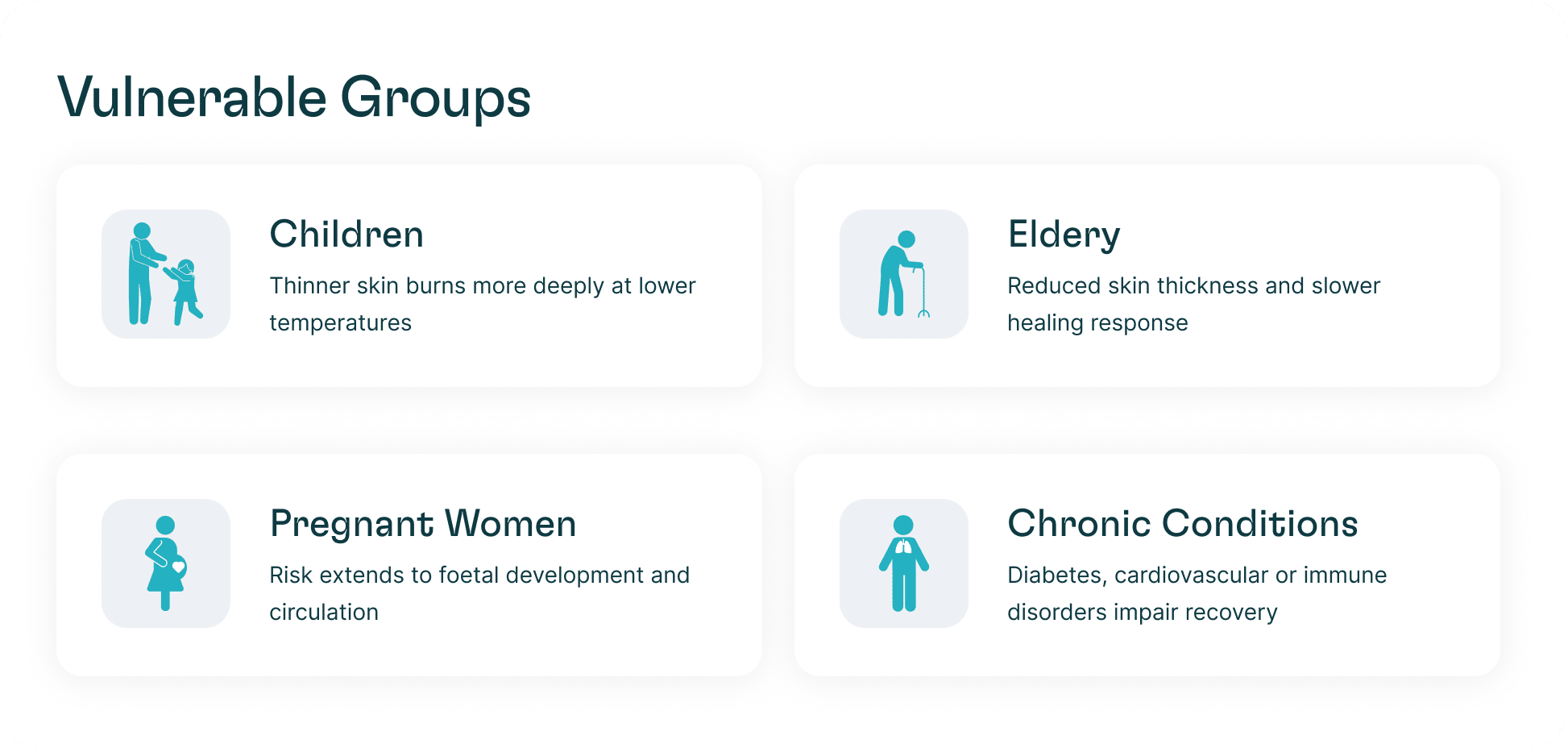
Vulnerable Groups

The impact extends to mental health as well. The trauma and stress of such events can trigger anxiety, persistent worry, sleep difficulties and depression-like symptoms. It is vital to address these effects alongside physical injuries. People affected are encouraged to seek support from family, friends or healthcare professionals once they are safe.

EURO

Burns

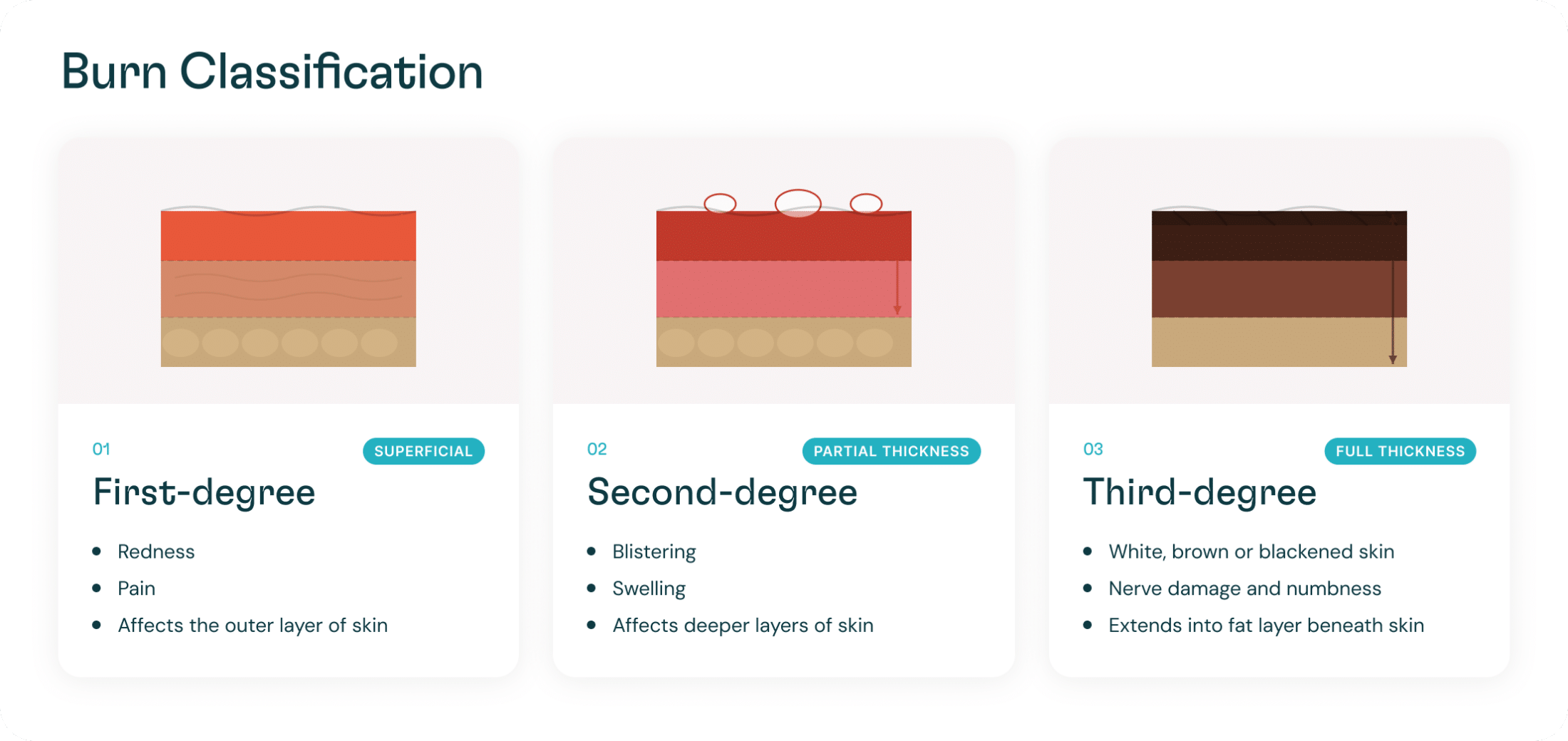
Exposure to heat from wildfires can cause skin burns of varying severity, depending on the depth of tissue damage.

First-degree burns affect the outer skin and may cause redness and pain. Second-degree burns affect deeper layers of the skin and may cause swelling and blistering, with a higher risk of scarring. 

Third-degree burns extend into the fat layer beneath the skin. Affected areas may appear black, brown or white, and the skin may look leathery. These burns can destroy nerves, causing numbness.

Burn Classification

Minor burns can be treated by holding the affected area under cool running water for about 10 minutes. Blisters should not be popped. Remove rings or other tight items from the area before swelling occurs. After cooling the burn, apply a lotion to prevent dryness and provide relief. Loosely cover the area with a clean bandage to protect blistered skin. If needed, take a painkiller.

For major burns, seek immediate medical attention. While waiting for help:

  • Gently remove tight items, as swelling can occur quickly.
  • Loosely cover the burn with sterile gauze or a clean cloth.
  • If possible, raise the burnt area above heart level.
  • Monitor for signs of shock, such as cool, clammy skin, weak pulse or shallow breathing. Seek assistance if necessary.

Smoke

Smoke inhalation causes more fire-related deaths than burns. This is the major health risk during wildfires, causing asphyxiation. Wildfire smoke, comprising gases and fine particulate matter (PM 2.5), can travel great distances and remain airborne for extended periods. These particles can penetrate deep into the lungs and enter the bloodstream, posing health risks even when wildfires are far away. Exposure may lead to symptoms such as burning eyes, runny nose, coughing, shortness of breath and chest pain, and increases the risk of respiratory and cardiovascular diseases. Exposure to wildfire smoke contributes to more than 100,000 deaths globally each year.

Certain vulnerable populations are at risk, such as children, the elderly, pregnant women and people with underlying heart or lung conditions. These groups should take extra precautions to minimise exposure during wildfire events.

Wearing a well-fitted N95, FFP2 or P100 respirator can help reduce exposure to fine particulate matter in wildfire smoke. Always check that the mask is designed to filter airborne particles and fits properly. If a dedicated mask is unavailable, a damp cloth can be used as a temporary measure, though it is not recommended for prolonged exposure to smoke or heat.

During summer, wildfires and heatwaves often occur simultaneously. Heat-related illness ranges from dehydration and heat exhaustion (thirst, fatigue, muscle cramps and dizziness) to life-threatening heatstroke, and can worsen cardiovascular, respiratory and kidney disease.

Mental Health

Like other traumatic events, experiencing a wildfire can lead to mental health symptoms, such as overwhelming anxiety, persistent worrying, difficulty sleeping and other depression-like symptoms. If experiencing an anxiety or panic attack near a wildfire, try to calm yourself by breathing slowly and focusing on responding appropriately to the situation, whether that involves finding shelter or moving to a safe area. Once out of danger, consider speaking with a family member, friend, counsellor or healthcare professional if you have any mental health concerns.

Heat

During summer, wildfires and heatwaves often occur simultaneously. Heat-related illness ranges from dehydration and heat exhaustion (thirst, fatigue, muscle cramps and dizziness) to life-threatening heatstroke, and can worsen cardiovascular, respiratory and kidney disease. Hundreds of thousands of heat-related deaths are estimated to occur globally each year. Europe remains particularly affected, with more than 61,000 excess heat-related deaths recorded during the summer of 2022 alone.

People with asthma or heart disease are especially vulnerable. Risk can be reduced by staying hydrated, wearing light clothing and avoiding outdoor activity during peak heat hours.

Contributors:

Farhan Rafi and Lorenzo Trevisan

Editor:

Paul Mutter, Global Coverage Manager at Riskline

Share

Destination Research

Destination risk, safety & travel reports

Travel Search

Visa, health, safety & documentation

TripReady

Pre-travel security & travel safety advisories

Realtime Alerts

Breaking on-site travel risk updates 24/7

Travel and Tech Data

Data to improve user satisfaction

Technology Solutions

APIs, widgets and portal

The Informer

Articles, news and product updates

Newsroom

The latest developments at Riskline

Resources

In-depth content on relevant topics

Download the PDF