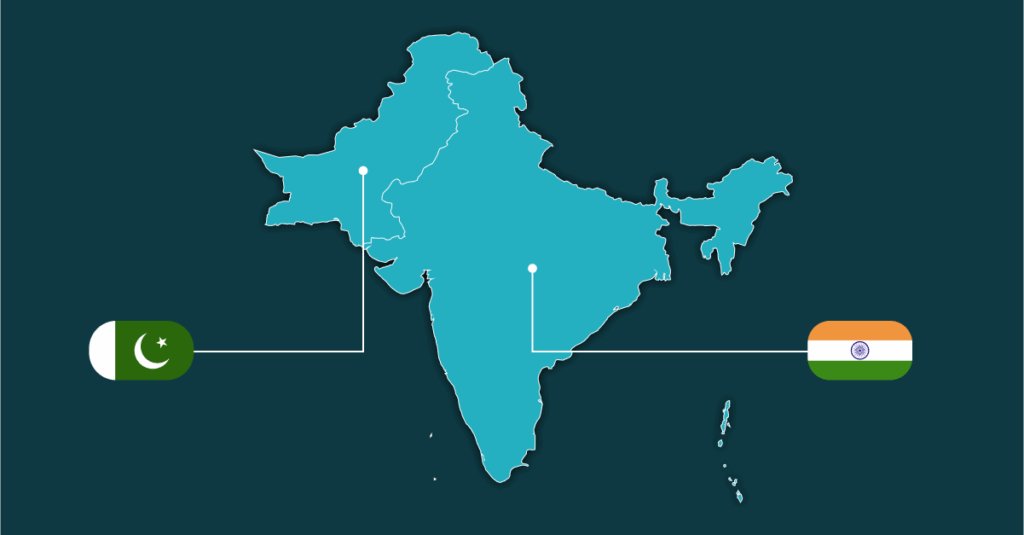
Tensions between India and Pakistan escalated into cross-border military clashes in early May. The situation followed a deadly terrorist attack in Indian-administered Kashmir, which sparked military retaliation, cross-border hostilities and significant diplomatic fallout.
While a US-brokered ceasefire has been in place since 10 May, the situation remains fragile. Isolated incidents of artillery fire and ceasefire violations continue to be reported along the Line of Control (LoC).
The conflict began on 22 April, when militants from The Resistance Front (TRF), an offshoot of Lashkar-e-Taiba, carried out a shooting attack on tourists in Pahalgam, Indian-administered Kashmir, killing at least 28 people, predominantly Hindus. In response, India suspended the Indus Water Treaty and revoked all short-term visas for Pakistani nationals. Both countries reduced diplomatic staff. Pakistan reciprocated with similar measures and closed its airspace to Indian airlines.
Cross-border clashes escalated from 7 May, when India launched a military operation. Both sides exchanged artillery, missile and drone strikes across the Line of Control (LoC) and the international border in the Kashmir and Punjab regions, resulting in dozens of casualties. Both countries targeted air and military bases, prompting airport closures and mass evacuations.
A US-brokered ceasefire took effect on 10 May, leading to the reopening of airports and airspace. However, diplomatic tensions persist and the risk of further escalation remains.
Riskline’s Response: Agility and Accuracy
Our analyst team worked 24/7 to provide clients with accurate, real-time intelligence on the conflict.
- We issued the first alert just six minutes after the incident occurred, an exceptionally fast response.
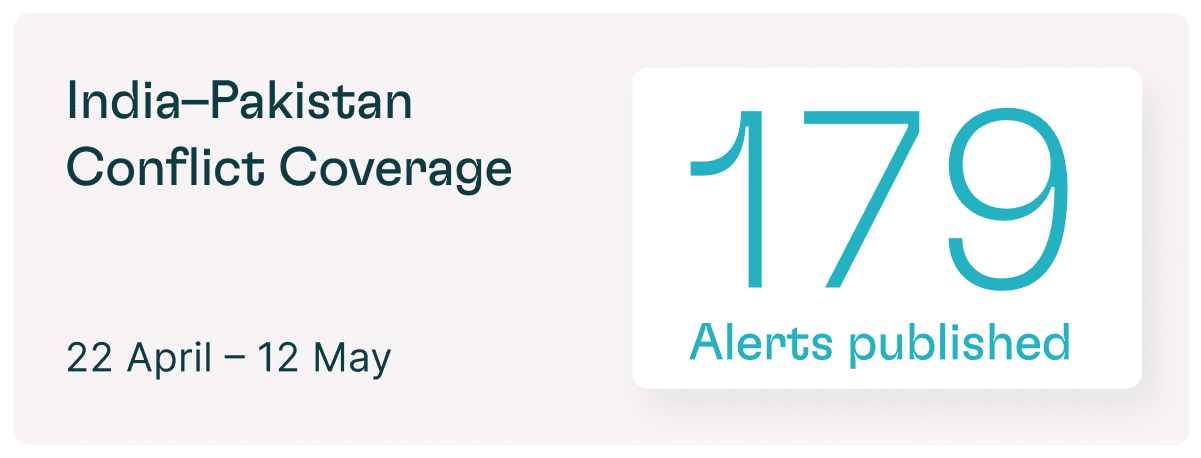
- We published 179 alerts covering key developments, travel disruptions and escalations.
- We updated advisories daily, or more frequently, as the situation evolved.
- We revised Country Reports for India and Pakistan to reflect the broader security implications and geopolitical fallout.
- We continuously verified information from official sources, social media and local outlets in multiple languages, which was particularly challenging due to the widespread misinformation in the media.
Impact on Travel and Ongoing Risks
Pakistan’s airspace reopened on 10 May; however, operational disruptions continue at key airports including Karachi, Islamabad and Lahore. Indian airlines, such as Air India and IndiGo, continue to reroute international flights to avoid Pakistani airspace, leading to longer flight times and increased ticket costs. Airlines, including Air France and Lufthansa, continue to avoid Pakistani airspace until further notice.
In India, several regional airports in northern states suspended operations until at least 12 May, with a gradual resumption of normal operations from 15 May.
Land border crossings, including Attari-Wagah, remain closed indefinitely. India and Pakistan have imposed strict security measures along border regions, with tourist areas in Jammu and Kashmir and Azad Kashmir closed to the public. India cancelled all short-term visas for Pakistani nationals, while Pakistan suspended similar schemes for Indian nationals. Diplomatic and long-term visa holders are exempt but remain under close scrutiny.
Despite the ceasefire, the risk of renewed cross-border clashes remains high, in particular along the Line of Control (LoC) and in the Punjab regions. Travel disruptions, including route closures, cancellations and delays, are likely to continue in the short term. Heightened security measures at airports, land borders and key transport hubs will remain in place. The downsizing of diplomatic missions may further impact consular services, with Indian nationals advised to avoid all travel to Pakistan. Both countries have advised their citizens abroad to return home where possible.
Our Commitment to Excellence in Crisis Monitoring
The India-Pakistan border crisis underscored our unwavering commitment to delivering clear, timely intelligence in highly volatile conditions. The scale of our output, the speed and agility of our updates and the depth of our analysis ensured our clients were able to make informed and confident decisions amid significant uncertainty.
“The latest India-Pakistan conflict posed a significant challenge due to the unprecedented military escalation and a surge of misinformation on both sides. Throughout the crisis, our analysts worked around the clock to provide clients with timely, verified and fact-based information”, says Avantika Deb, Riskline’s APAC Senior Analyst.
We continue to monitor developments closely and remain prepared to provide further intelligence as the situation evolves.