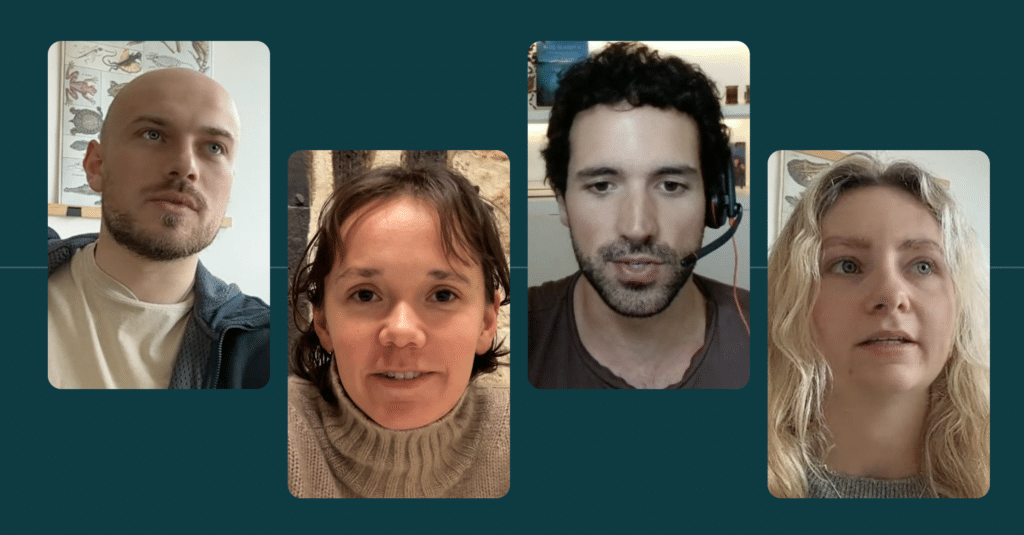
This piece is based on Riskline’s session at the Nordic Business Travel Summit 2026 in March, which challenged the travel risk industry to stop talking at Gen Z and start building with them. The session was designed by Suzanne Sangiovese, Riskline’s CEO, and presented by our Founder and Executive Chairman, Kennet Nordlien.
“If your risk programme assumes it is the primary source of truth, that assumption is already outdated,” says Riskline CEO, Suzanne Sangiovese. The conclusion came directly from the source: Gen Z travellers across Brazil and Europe interviewed by Riskline shared how they experience and interpret travel risks today.
What emerged was a clear picture of a generation that has outpaced the systems designed to support it. The next generation of business travellers operates in an information environment that most travel risk programmes were never designed for, and many still have not adapted to.
“Personal safety and security are top factors for Gen Z travellers, especially in the UK and Asia,” says Riskline Founder, Kennet Nordlien. “They think about safety and what’s acceptable. But they make those calculations differently from other generations, relying on peer input, real-time content, and lived experience over official documentation. They trust companies that explain risk clearly.”
There’s a gap, and it’s visible in the behaviours that never make it into incident reports.
Why Gen Z isn’t following your corporate travel policy
Traditional risk messaging speaks a language Gen Z (born 1997–2012) has already stopped listening to: “Don’t do this.” “Because our policy says so.” What resonates instead is context: the reason behind the rule, real-world consequences instead of hypothetical scenarios, and authentic peer perspectives over liability-driven boilerplate.
Gen Z travellers rely on digital and social platforms when planning trips. According to Booking.com, 57% use channels such as TikTok and Instagram to inform travel decisions. A recent Perk survey shows that 45% of Gen Zers trust travel recommendations made by influencers, and one in five use artificial intelligence for personalised travel recommendations. These findings were also reflected in Riskline’s interviews.
When asked how they typically prepare for a trip, respondents described a process that looks very different from a corporate policy checklist. Google, travel blogs, social media, and online articles were among the sources mentioned. “I would read the latest news articles and get information on the situation there, but I usually trust the official foreign affairs advisories,” says Johanna (28), a German national, researcher.
The influence of colleagues was also clear: “A lot of my trust is just put in my senior colleagues, because I usually go on trips with them or the trips are arranged by them,” adds Amber.
When the traditional format appears, it often doesn’t land: “Onboard videos that you have to click through to see travel risks… I had to do that a little bit, and that was really difficult to follow,” Johanna says.
“Maybe it’s a Gen Z problem, but we can’t maintain our attention on long, comprehensive documents anymore, and we need to speak to people,” explains Yuri (25), a German national, architect.
When policies fail to speak to their audience, they quickly become background noise. Risk awareness fades, travellers stop engaging with official guidance, and important details disappear from view.
That disconnection creates a blind spot. Once people begin relying on informal workarounds instead of established processes, organisations lose visibility, and often only realise the extent of the exposure when something goes wrong.
Building Travel Risk Management with Gen Z
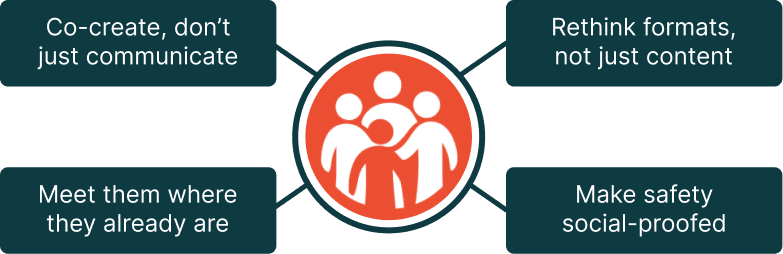
The answer is a shift in approach: treat younger travellers as contributors to the programme rather than subjects.
Embrace co-creation. Younger travellers should be partners in refining policies, testing scenarios, and reviewing corporate language. Even minor contributions drive significant engagement, shifting the dynamic from compliance to personal ownership.
Rethink formats. Gen Z processes information fast, visually, and on mobile. The format needs to reflect that behaviour: short-form videos (30 seconds or less), visual explainers, scenario-based formats, and mobile-first alerts that are immediate and actionable.
Meet them where they already are. That means using internal platforms, chat tools, and real-time alerts. Safety has to be accessible in the moment it’s needed. As Johanna suggests: “I would like an application where you can see what kind of information you need to know before going to a country.”
Make safety socially validated. They are digitally active, open to peer influence, and seeking personalised experiences. As Yuri suggests: “Organise a meeting between someone who’s going on a trip and another person who has been there. People would be able to ask about things that concern them personally.”
Duty of Care as a shared responsibility
Most travel risk programmes are built around the people who manage them: procurement teams, security functions, travel managers, and the tools reflect that. But accountability at the planning stage doesn’t follow a traveller onto the ground. When travellers are under pressure and making decisions on the ground, that’s where most programmes break down.
Marco’s trip to Baja California, Mexico, illustrates this clearly: “There are several areas that you shouldn’t visit. You should try and do everything with a pre-scheduled driver in order to guarantee safety, someone local. I had to figure these things out by myself while I was there.”
He wasn’t reckless, just resourceful. But he was doing the work his company’s risk programme should have done. That gap is exactly where duty of care breaks down and where the next generation of travel risk management needs to begin. In the field, in real time, at the traveller’s side.
5 ways to improve your travel risk programme today
Travel risk programmes cannot stay static while traveller behaviours and communication habits continue to evolve. When people disengage from the messaging, organisations lose visibility before they realise there is a problem. Often, improving engagement starts with making communication clearer, more relevant, and easier to connect with.
- Ask one Gen Z traveller for feedback this quarter.
- Experiment with one new format (video, visual, scenario-based) to make safety feel real.
- Review one policy through a Gen Z lens, and update it if needed.
- Track travel risks continuously rather than relying on annual reviews.
- Listen first instead of justifying current processes.
The next generation of travellers is watching. Don’t let them scroll past safety.