
By Lorena Peña
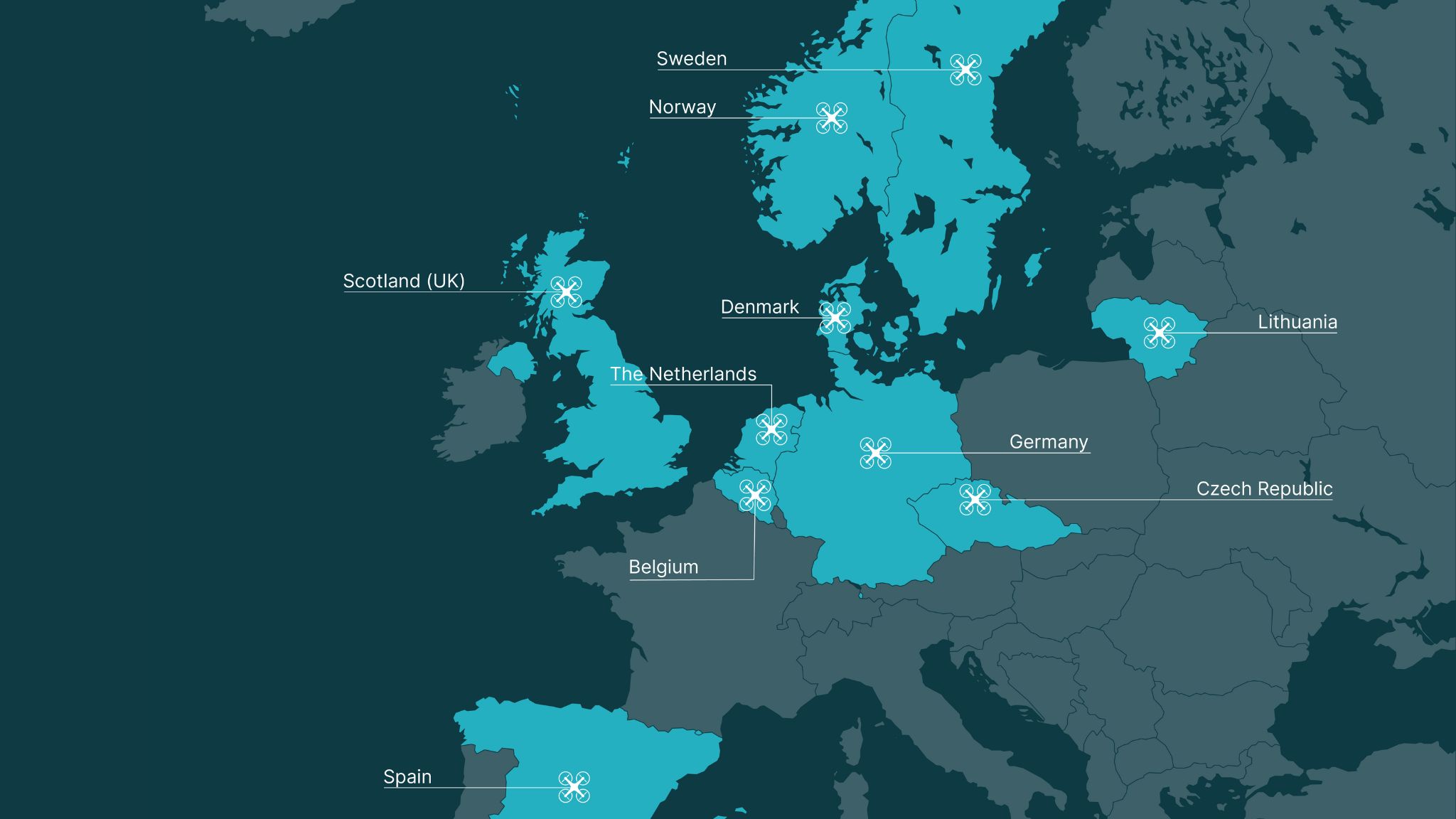
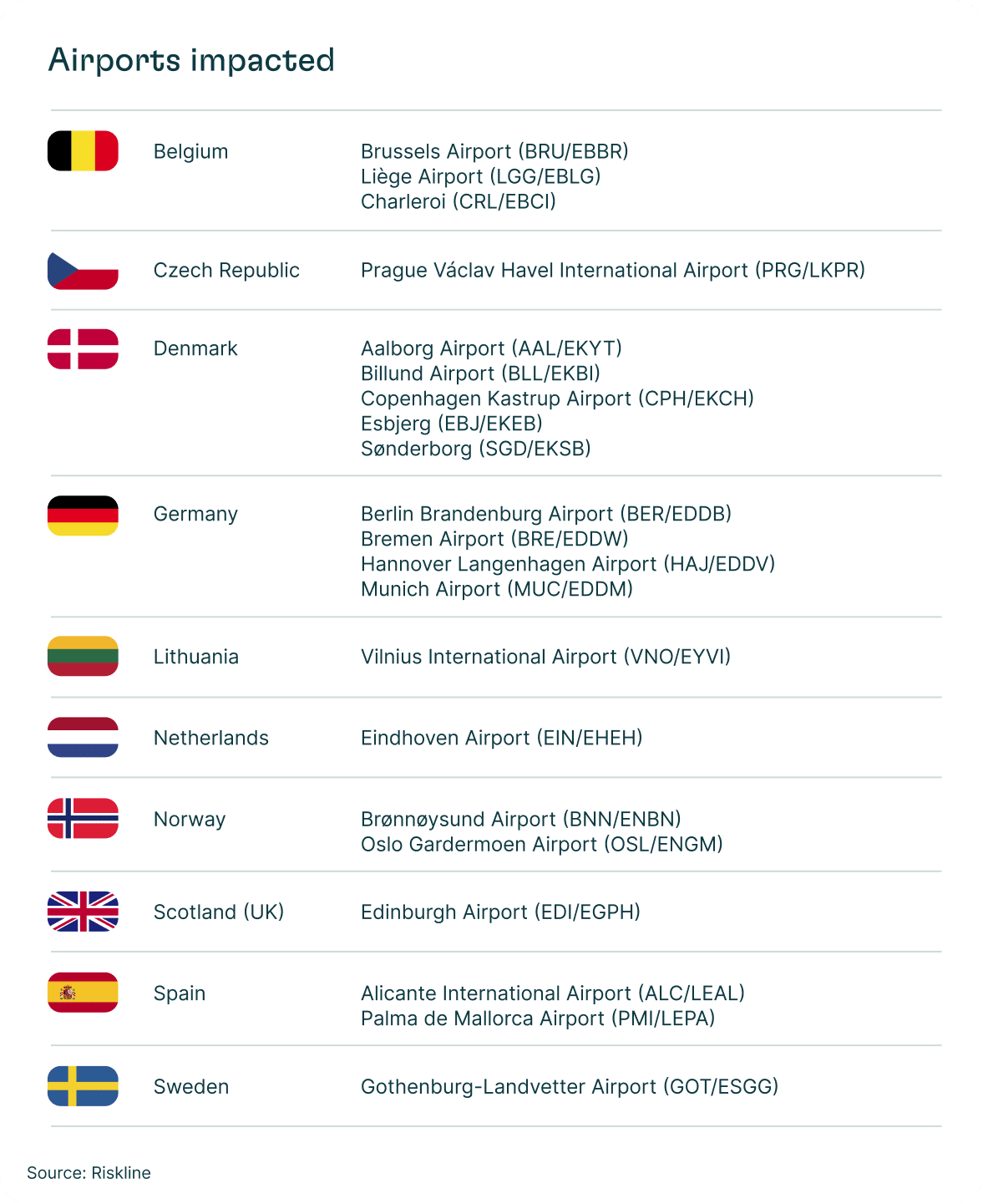
Over the past few months, drone sightings and incursions have been disrupting flight operations at various European airports, including Denmark, Norway, Belgium, Germany and others. On 22 September, drone sightings triggered the closure of Copenhagen Airport (CPH) for around four hours, resulting in at least 109 cancellations and 51 flights being diverted.
Drone disruptions are not new. Past incidents have shown the impact on travellers and flight operations:
- In 2018, more than 140,000 travellers were stranded and their flights delayed after dozens of drone sightings shut down Gatwick Airport in London in the days leading up to Christmas.
- In 2023, Dublin Airport was closed six times due to illegal drone activity in the first eight weeks of the year.
This phenomenon has gained more attention from authorities due to the heightened tensions in Europe with the ongoing conflict between Ukraine and Russia and the known hybrid warfare methods of the latter.
For Riskline, what makes this relevant for our clients and travellers is that incidents have become more frequent, creating a new travel disruptor that is highly unpredictable. Incidents were sporadic in 2024 and early 2025, but spiked suddenly in September, reaching their highest levels in October according to Riskline monitoring.
According to our travel intelligence analyst Lorena Peña: “Unlike strikes by aviation workers or adverse weather, drone incursions are highly unpredictable, similar to the cyberattacks and IT outages that have recently affected some airports in Europe, as no early warnings are usually in sight”.
Why drone incursions are a growing challenge for airports
Drones are highly disruptive: they are small, agile, difficult to detect and cannot be easily captured. Since aerodromes rely on human detection, identifying the remote pilot is also difficult. Thus, this becomes a real challenge for airport authorities as it tests their preparedness to deal with the situation.
With flights taking off and landing at risk, authorities need to take some measures for the safety of both passengers and aviation workers. This is when disruptions take place, as measures can include the closure of the airport’s airspace, the suspension of flight operations, which result in delays or cancellations, and even the diversion of flights to nearby airports. However, what is most problematic is that these disruptions can last for extended periods.
Understanding that this can affect travellers’ plans, Riskline, as a traveller intelligence provider, has put this phenomenon on its radar. With our alerts, we can inform travellers of these disruptions in advance or provide updates during their trips.
Riskline’s response
Our team of analysts tracks any information that might indicate disruption of flight operations at airports by leveraging:
- Timely updates: Number of alerts issued from 22 September concerning drone sightings at commercial airports: 41 (including updates on developments and resumption of flight operations). The objective is to keep travellers informed of disruptions, cancellations and delays that might impact their travel plans.
- Actionable guidance: Advice to check flight statuses, allow extra check-in time and explore rebooking options.
- Regional perspective: Continuous monitoring across the region to stay updated on developments and trends.
Forecast and outlook
- Drone incursions are likely to continue happening at the European level, as no responsible actor has been identified yet.
- While aviation authorities adopt new security measures against this problem, unprepared airports will remain vulnerable.
- Affected countries could restrict parts of their airspaces, which can possibly affect flight routes.
Riskline travel advice
- Contact booking agents for updated itineraries, rebooking or refund options.
- Allow extra time at airports and monitor flight status before departure.
- Stay informed through official airport and airline channels and Riskline alerts for the latest updates.
- Make contingency travel plans in case urgent travel becomes necessary.
- Purchase travel insurance before travelling.