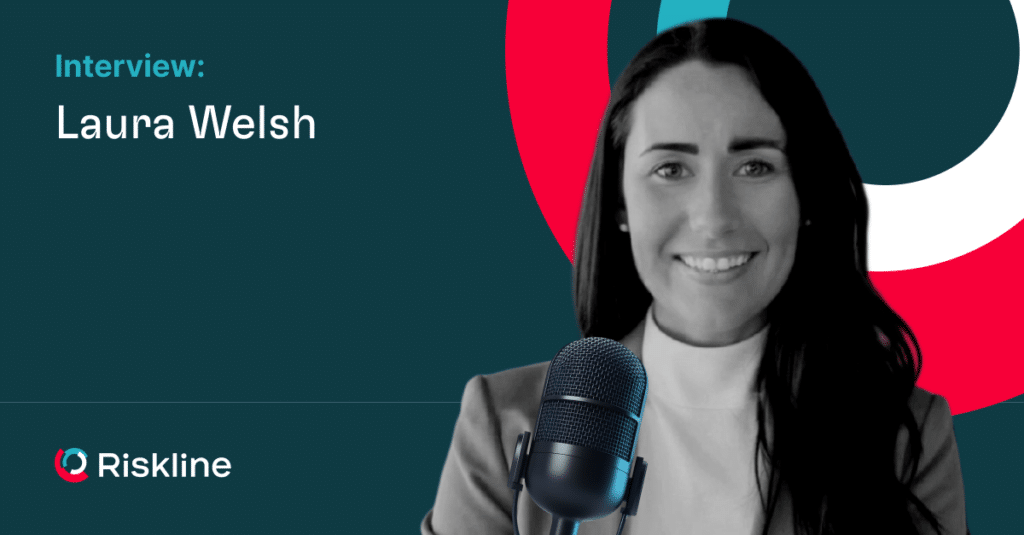
Over the past year, Laura Welsh, Head of Global Partnerships and Customer Success, has led the development of Riskline’s dedicated Customer Success function, working closely with clients to build long-term strategic partnerships. We sat down with Laura to reflect on the evolution of travel risk management and her experience at BTS Europe over the years.
Q: Since first attending the Business Travel Show Europe (BTS) in 2010, you’ve seen both the event and the industry evolve significantly. How has the conversation around travel risk changed over that time, and what does it mean to now represent a travel risk intelligence company at the show?
Laura: When I first attended BTS, conversations around travel risk were often quite reactive and heavily focused on major disruptions or emergency response. Duty of care existed, but it wasn’t always viewed as a strategic part of a travel programme. Over the last 15 years, there has been a significant shift.
Today, travel managers are expected to anticipate risk, support traveller wellbeing, and make informed decisions in real time. The scope of what we consider “risk” has also expanded. It’s no longer just geopolitical events or natural disasters, but operational disruption, climate events, cyber concerns, traveller sentiment, and how quickly information can change.
Representing a travel risk intelligence company at BTS Europe now feels particularly relevant because risk intelligence has become part of the wider business travel conversation, rather than a separate niche discussion. Organisations want integrated, actionable insight that helps them support travellers without creating friction, and that’s exactly where Riskline fits.
Q: You’ve built your career across TMCs, technology strategy, and global partnerships. What drew you specifically to the risk intelligence side of business travel?
Laura: I’ve always enjoyed working at the intersection of technology, customer strategy, and operational delivery, particularly in areas where information genuinely helps people make better decisions. What attracted me to the risk intelligence side of the industry was the impact it can have. Business travel has become increasingly complex, and organisations need reliable, timely intelligence to support both travellers and internal teams. Risk intelligence sits at the centre of that.
It’s also an area where strong partnerships are essential. Whether you’re working with TMCs, assistance providers, or technology platforms, success depends on collaboration and ensuring the right information reaches the right person at the right time.
Q: Travel managers today are balancing cost control, compliance, duty of care, and increasingly complex itineraries. Where does risk intelligence fit into that picture without adding to the noise?
Laura: That’s one of the biggest challenges in the industry right now. Travel managers already deal with huge amounts of information, so risk intelligence only adds value if it is relevant, timely, and actionable. For us, the goal is not to overwhelm users with alerts or data points. It’s about surfacing the information that actually matters to a specific traveller, route, or situation, and integrating it naturally into existing workflows.
Good risk intelligence should help travel managers prioritise decisions more quickly, reduce uncertainty, and support traveller confidence without creating additional operational burden. If it becomes another platform to constantly monitor, it’s probably not solving the problem effectively.
Q: AI and data analytics are major themes at BTS this year. How does Riskline approach those technologies, and what do they actually mean for travel managers trying to make faster, better decisions?
Laura: AI and analytics are incredibly valuable when they help simplify complexity and improve speed to insight.
At Riskline, we see AI as an enabler rather than a replacement for human expertise. The challenge in travel risk is not just gathering data. It’s validating it, contextualising it, and ensuring it’s relevant for travellers and organisations. For travel managers, the practical value comes from being able to identify what matters faster. That might mean filtering large volumes of information into clear summaries, highlighting potential operational impacts earlier, or supporting faster decision-making during disruptions.
Ultimately, travel managers don’t need more data. They need confidence that the information they’re acting on is accurate, relevant, and delivered quickly enough to make a difference.
Q: When clients engage with Riskline, what does successful adoption look like? What separates programmes that become embedded into daily operations from those that remain underused?
Laura: The most successful programmes are the ones where risk intelligence is treated as part of the wider travel ecosystem rather than a standalone tool.
Good adoption usually starts with clear objectives. Organisations that understand what they are trying to achieve, whether that’s improving traveller communication, strengthening duty of care processes, or supporting operational decision-making, tend to see much stronger engagement.
Partnership and onboarding are also critical. Technology alone does not drive adoption. The programmes that work well are the ones where there is collaboration between the client, the travel programme stakeholders, and the technology provider to ensure the solution fits naturally into existing workflows.
Simplicity is another major factor. If travellers and internal teams can access relevant information easily and understand its value quickly, adoption tends to follow naturally.
Q: Assistance companies and travel technology providers are increasingly embedding risk data into their platforms. What makes those partnerships genuinely successful?
Laura: The strongest partnerships are built around shared objectives and a clear understanding of the end user experience.
Embedding risk intelligence successfully is about ensuring the information is relevant, reliable, and delivered in a way that supports the customer journey inside the partner platform.
Transparency, collaboration, and responsiveness are all important. The best partnerships involve continuous communication between teams, alignment on customer needs, and a willingness to evolve the solution as travel programmes change.
Ultimately, successful partnerships feel seamless to the customer. The risk intelligence becomes part of the experience rather than an additional layer sitting beside it.
Q: If you could change one thing about how the business travel industry approaches risk management today, what would it be?
Laura: I would like to see risk viewed less as a compliance exercise and more as an ongoing strategic conversation.
The organisations that manage travel risk most effectively are usually the ones that integrate it into broader business decisions, traveller experience, and programme strategy rather than only focusing on response during a crisis.
There is also an opportunity for the industry to become more proactive and collaborative. Travel risk impacts multiple stakeholders, including travel managers, HR teams, security teams, TMCs, assistance providers, and travellers themselves. The more aligned those groups are, the more effective and resilient travel programmes become.
Good risk management should enable confident travel, not discourage it.
Laura will be representing Riskline at the Business Travel Show Europe in London. Visit our BTS Hub to learn more about our participation, or schedule a meeting with our team during the event.