
With contributions from Ramya DilipKumar
Travel offers new experiences and opportunities, but it can also bring unexpected challenges, from political unrest and natural disasters to health and security risks. Staying safe requires accurate, timely and practical information tailored to the specific situation and location.
Riskline Advisories provide exactly that. With concise, actionable insights and hyper-local context, they help companies and travellers anticipate risks and respond effectively. Using a detailed five-tier risk scale (Low, Moderate, Medium, High, and Extreme), they offer greater granularity than government advisories, enabling a more precise evaluation of risky situations.
What Are Riskline Advisories?
Riskline Advisories are concise reports focusing on travel, health and security-related events. They provide information about the actual or anticipated impact of incidents that may last anywhere from several weeks to months. Each advisory provides actionable guidance for those planning to travel to, or already in, the affected area.
Serving as a bridge between Riskline Alerts and more detailed Destination Reports, these advisories give a clear picture of risks while offering practical recommendations.
Types of Advisories
Riskline Advisories fall into two main categories: Geographic and Thematic.
Geographic Advisories
Semi-permanent or permanent Advisories cover areas where conditions differ from the overall country risk level. They are typically long-term, remaining applicable for the foreseeable future, but are routinely reviewed and updated to ensure the information stays accurate and relevant. These advisories typically do not have an end date.
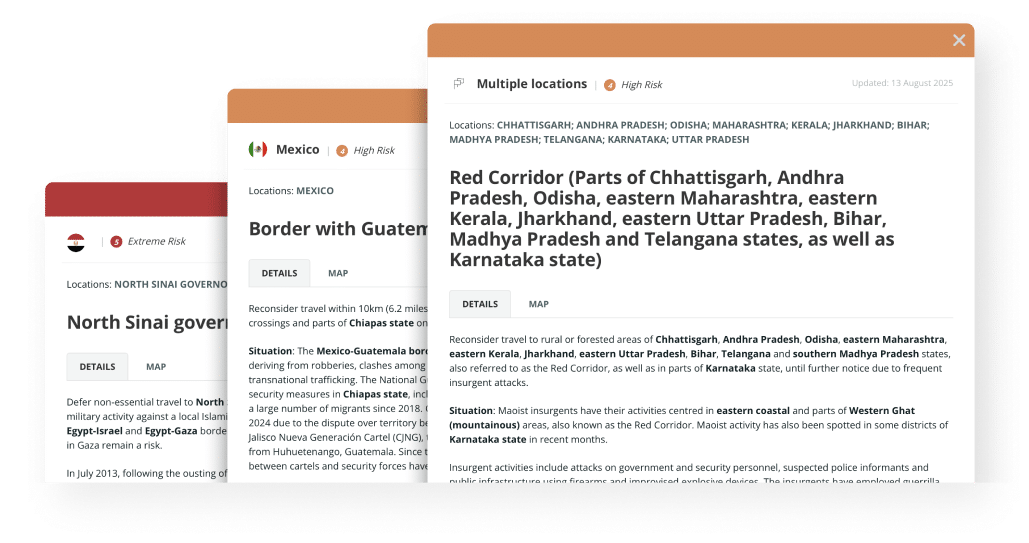
Examples:
- North Sinai Governorate, Egypt
- Border with Guatemala, Mexico
- Red Corridor, India
Thematic Advisories
Temporary Advisories focus on events or risks that can affect multiple areas but share a common theme. They have a defined end date and cover issues such as demonstrations and unrest, natural and environmental hazards, terrorism, health/medical risks and crime, providing timely guidance while the situation remains active. These advisories are updated more frequently, sometimes multiple times daily, as and when a situation rapidly evolves.
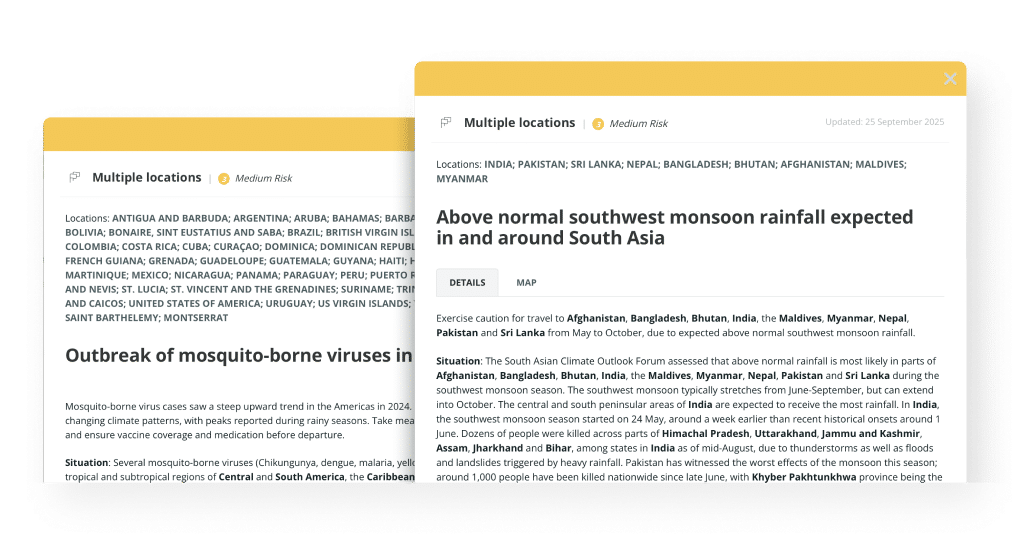
Examples:
- Anti-police violence protests in urban hubs
- Aftermath of a strong earthquake
- Upcoming elections that could carry a risk of violence
Structure of a Riskline Advisory
Each advisory is carefully structured to provide clear and actionable information:
- Situation: A summary of what has happened.
- What to Expect: Immediate conditions travellers may encounter.
- Impact on Travel: Effects on transportation, infrastructure and services.
- Advice: Clear, practical recommendations for travellers.
- Context: Broader background to help understand the situation.
You can view an example of an Advisory here.
How Riskline Advisories Differ from Government Advisories
While government advisories are often aimed at protecting their own citizens, Riskline offers guidance for all travellers, regardless of nationality. Some key differences include:
- Regional nuances: Riskline provides hyper-local insights often overlooked in broader government advisories.
- Timeliness: Advisories are updated frequently, often within hours of incidents with ongoing impacts.
- Neutrality: As an independent provider, Riskline remains free from political or diplomatic bias.
- Practical guidance: Advisories are tailored to traveller needs, offering actionable steps rather than only general warnings.
Anticipatory Advisories for Seasonal Threats
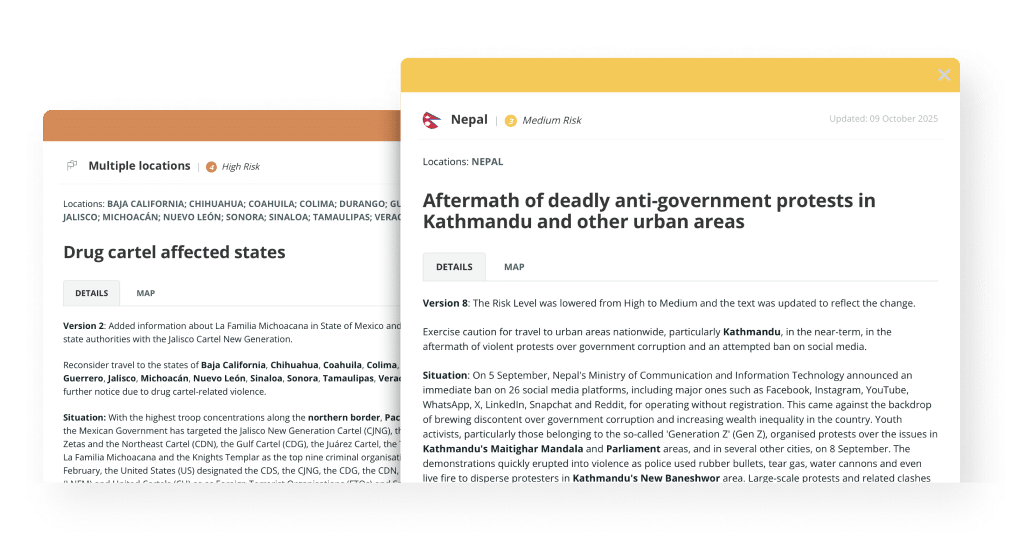
Some risks, such as seasonal weather events or disease outbreaks, are predictable. Riskline issues anticipatory advisories to help travellers prepare for these threats.
For example:
- Seasonal flooding advisories may include possible evacuation routes, expected travel and transport disruptions, infrastructure updates and safety precautions.
- Health advisories might cover flu outbreaks or other seasonal disease risks along with safety tips to mitigate these risks.
These proactive advisories help travellers and organisations reduce exposure, plan accordingly and avoid disruptions.
Why Riskline Advisories Stand Out
Riskline Advisories provide timely, unbiased and practical information. By delivering hyper-local intelligence and actionable guidance, they help both companies and travellers anticipate risks, respond effectively and navigate challenging situations with confidence.
In today’s complex and unpredictable travel environment, Riskline goes beyond general warnings to provide precise, real-world insights that enable travellers to stay one step ahead. By combining accuracy, context and foresight, our Advisories don’t just inform. They equip people to make smarter decisions, reduce disruptions and ensure safer, more seamless journeys, wherever their plans take them.