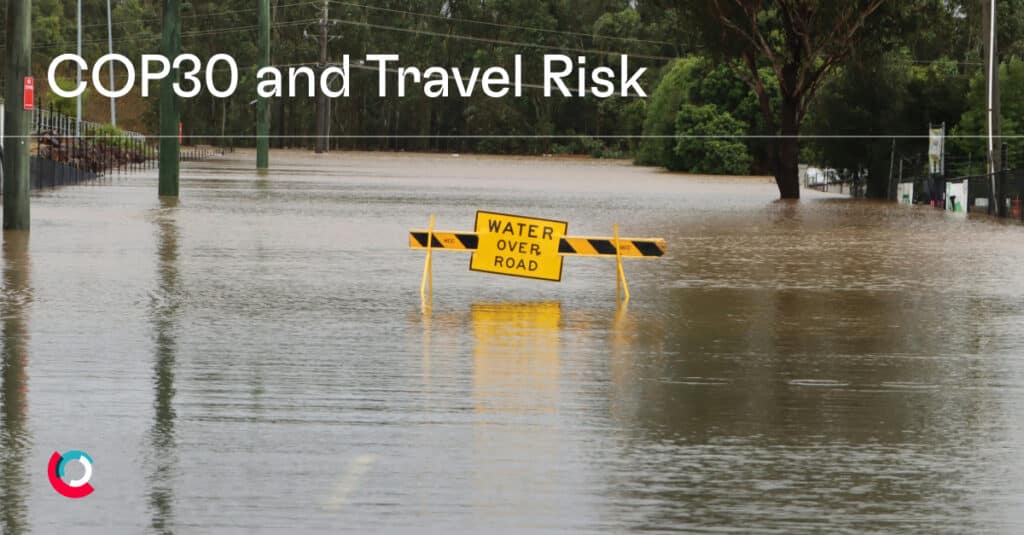
The COP30 climate summit Brazil, concluded last Friday, has underscored a simple yet urgent truth for the travel industry: climate change is no longer a distant concern; it is a travel risk today. From extreme weather events to health impacts and population displacement, corporate travellers and insurers must rethink how they plan, protect and insure journeys.
This change is visible in our analysts’ everyday work. Driven by the growing frequency and severity of extreme weather events, Riskline’s natural and environmental alerts increased by 37% in 2025, reflecting intensified heatwaves, wildfires, hurricane and typhoon seasons across the globe.
Lessons for Travel Managers and Insurers
Health and migration are real travel concerns
COP30 highlighted the growing link between climate change, migration and public health. The World Health Organization warns that climate stress is displacing millions and straining healthcare systems. In 2023, sudden-onset weather events forced over 20 million people to relocate within their own countries. Projections suggest that by 2050, climate-related impacts could drive more than 216 million people to move internally.
For travel managers and insurers, this means thinking beyond traditional security and visa checks. In climate-sensitive destinations, it’s crucial to assess local healthcare infrastructure, emergency response capabilities and the accessibility of critical services. Extreme weather events can quickly overwhelm hospitals, disrupt transport and limit access to medical care, putting travellers at risk and creating potential liability for organisations.
Tourism can lead the way
Discussions on tourism at COP30 demonstrated that tourism is not only vulnerable to climate change but also part of the solution. The event brought together governments, international organisations, the private sector and civil society to show how tourism can drive sustainable solutions across energy, biodiversity, food systems, finance and human development
Travel managers can support these efforts by prioritising bookings with environmentally responsible airlines, hotels and travel suppliers, helping reduce their organisation’s carbon footprint. Meanwhile, insurers should cover disruptions caused by extreme weather and incentivise low-carbon travel choices, turning sustainability into both a protective measure and a strategic advantage.
Early-warning systems are essential
COP30 reinforced the critical role of early-warning systems for climate hazards, from storms and floods to heatwaves and wildfires. For insurers and corporate travel teams, this means more than simply monitoring the weather. It requires integrating real-time alerts into travel planning.
By leveraging timely, human-verified information, travel managers can proactively reroute itineraries, delay trips or implement safety measures to protect employees. Insurers can use the same data to adjust coverage, anticipate claims and design products that account for climate-driven disruptions. In practice, early-warning systems help organisations minimise risk, reduce operational disruption and uphold duty-of-care obligations in an increasingly unpredictable climate.
Climate finance shapes risk
Destinations that receive targeted funding for infrastructure improvements, disaster preparedness, or sustainable development can significantly reduce the likelihood and impact of climate-related disruptions. Conversely, gaps in funding can leave travellers exposed to floods, storms, heatwaves or other hazards.
For travel managers and insurers, this means continuously monitoring the resilience of destinations and factoring funding shifts into travel planning and insurance coverage. By understanding which regions are actively strengthening their climate resilience, organisations can make informed decisions, mitigate risk and better protect travellers and assets.
How Riskline Supports Travel Risk Management
At Riskline, we combine human expertise, AI speed and wide-ranging open-source intelligence for smarter travel risk insights, covering political, health, security and increasingly climate-related risks. Here’s how we help:
- Integrated risk intelligence: Organisations gain insight into climate hazards alongside traditional risks, supporting safer decisions.
- Early-warning alerts: Real-time notifications allow teams to reroute, delay or adjust business trips.
- Destination risk profiling: Assess the resilience and vulnerability of destinations to climate and environmental risks.
- Sustainability-aligned Travel Intelligence: Support corporate travel programmes that prioritise low-carbon or climate-conscious choices.
COP30 made it clear: climate resilience is now integral to travel risk management. Travel managers and insurers must act decisively, using intelligence to protect travellers and business operations alike.
Riskline is here to support travel teams with timely, human-verified insights that make business travel safer, smarter and more sustainable.