With contributions from Claudia Gualdi
The European Union will begin rolling out its long-awaited Schengen Entry/Exit System (EES) this year, on 12 October. When fully implemented, it will represent one of the EU’s most significant border control upgrades in decades. It aims to prevent irregular migration, combat cross-border crime and strengthen security, while maintaining the region’s hallmark mobility. The EES has already been delayed four times since its initial planned launch in 2022, mainly due to the technical complexities involved.
What is the EES?
The Schengen Entry/Exit System (EES) is an automated border management system introduced by the EU to enhance security and facilitate travel for non-EU citizens across the Schengen Area. It will replace manual passport stamping with automated checks. Biometric data of travellers entering through the EES will be recorded upon arrival and departure. It will record entries, exits and entry refusals. A passport control officer may still ask additional questions before granting or denying travellers access.
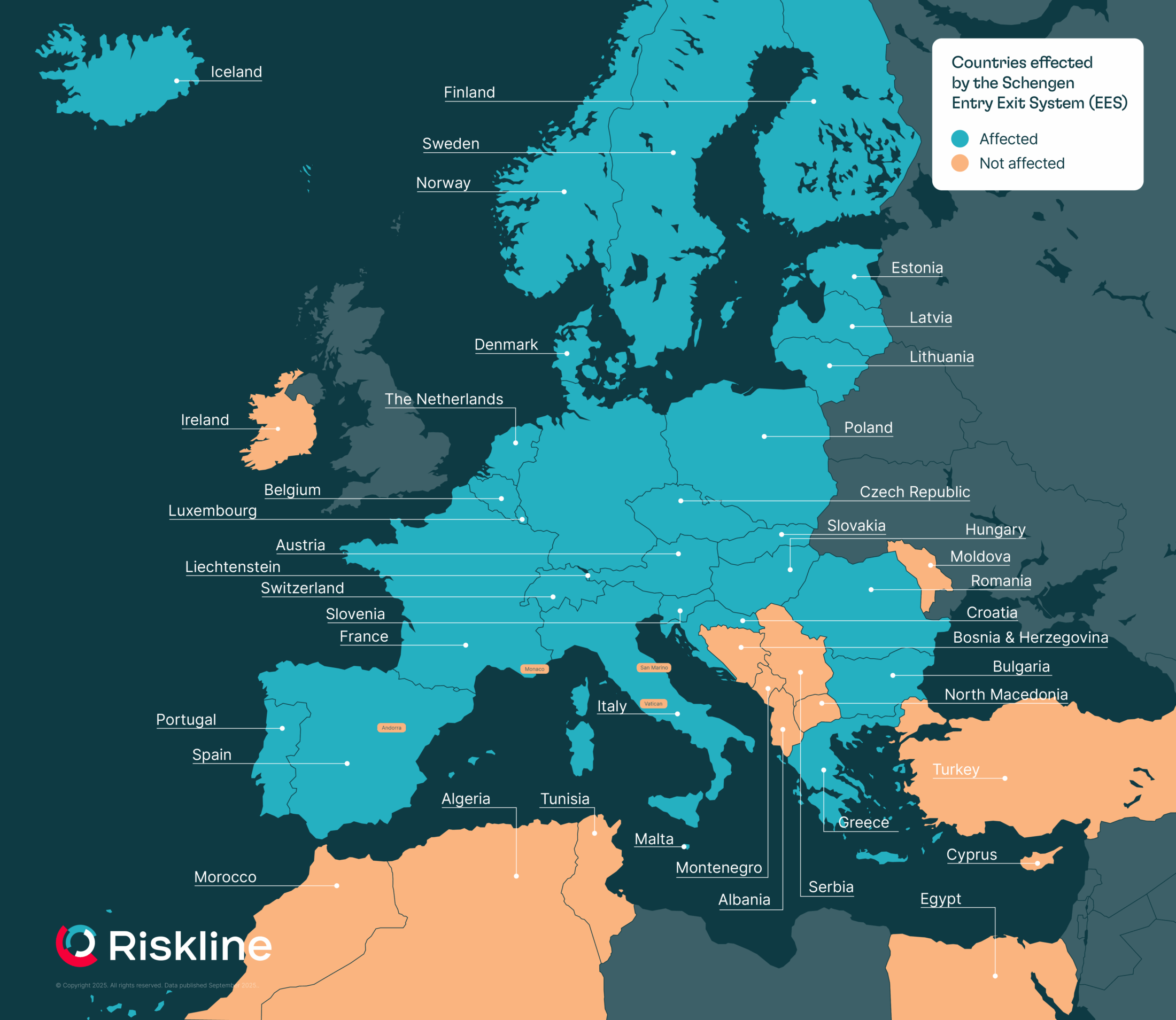
The rules will apply to visa holders and visa-exempt travellers entering for short stays of up to 90 days within a 180-day period. It will affect all non-EU nationals, including citizens of Iceland, Liechtenstein, Norway and Switzerland, with some exemptions. Cyprus and Ireland, though EU members, will continue to stamp passports manually and remain outside the system.
Timeline and border crossing points
The new checks will be in place at all official Schengen external borders, such as airports, seaports and land crossings. This includes UK–EU points such as Dover, Eurostar terminals and the Euro Tunnel. Data collection will be introduced gradually until 9 April 2026, with the system fully operational from 10 April 2026.
Who will be most affected
Travellers with prior overstays, rejected visa applications, incomplete documentation or soon-to-expire residence permits are most likely to encounter additional scrutiny. Cross-border commuters, family members of EU citizens without comprehensive paperwork and third-country nationals awaiting residency approvals may also face longer checks.
Possible teething problems
The EU expects automation to ease queues over time, but early technical issues may cause delays. Travellers are advised to allow at least two hours for connections and use optional pre-registration via kiosks or apps where available. Those without biometric passports will need to use manual lanes.
Traveller advice
- Ensure that your identification and travel documents are valid and compliant with Schengen entry requirements and that they will not exceed the maximum permitted duration of stay.
- Check the number of days that you are still allowed to stay in the territory of European countries through the short-stay calculator tool or via the equipment installed at some external borders. Passport control officers may also provide this information upon request.
- Allow at least two hours between Schengen connecting flights until the EES is fully implemented.
- Keep detailed travel records, including boarding passes, passport stamps, proof of legal residence or renewal applications.
- If you have previously overstated, seek legal advice before travelling close to the launch date.