
Repeated drone incursions in the Baltic region are accelerating European security integration, exposing vulnerabilities in civilian resilience and increasing risks for regional stability, aviation and business mobility.
The Baltic states are facing a growing security challenge linked to the spillover effects of the Russia–Ukraine war. Since 2024, Lithuania, Latvia and Estonia have reported repeated drone incursions, airspace violations and electronic warfare disruptions associated with intensified Ukrainian long-range strikes against Russian targets. Although many of the drones involved are believed to be Ukrainian devices diverted from their intended routes, the incidents form part of a broader hybrid threat environment shaped by Russian electronic warfare and strategic pressure on the North Atlantic Treaty Organization (NATO)’s eastern flank.
Consequently, the region is undergoing a rapid shift toward enhanced civil defence, counter-drone capabilities and deeper NATO-European Union (EU) security coordination. The threat is no longer confined to the Baltic region. On 29 May, a Russian drone entered Romanian airspace and crashed into a residential building in Galați, injuring civilians and prompting evacuations. The incident underscores the growing risk of conflict spillover onto NATO and EU territory.
How modern warfare is affecting civilian infrastructure
The current situation illustrates the transformation of modern warfare in Europe. The war in Ukraine has demonstrated how relatively inexpensive drones and electronic warfare systems can generate significant military, political and psychological effects. Russian GPS jamming and spoofing systems operating from Kaliningrad are likely disrupting drone navigation and contributing to drones deviating into NATO airspace. Such interference not only affects military operations but also creates direct risks for civilian infrastructure and commercial aviation across northern and eastern Europe. Several transport hubs have already experienced operational disruption linked to drone sightings.
In September 2025, drone incursions temporarily shut down operations at Copenhagen (CPH/EKCH) and Aalborg (AAL/EKYT) airports in Denmark, while Oslo Airport (OSL/ENGM) in Norway also suspended activity following similar incidents. More recently, on 20 May, Lithuania imposed temporary airspace restrictions following a drone sighting near the Belarusian border, leading to the suspension of operations at Vilnius International Airport (VNO/EYVI) and disruptions to rail services nationwide. These incidents demonstrate how drone-related security alerts are increasingly affecting both aviation and ground transportation networks in northern Europe.
Why the Baltic states are particularly vulnerable
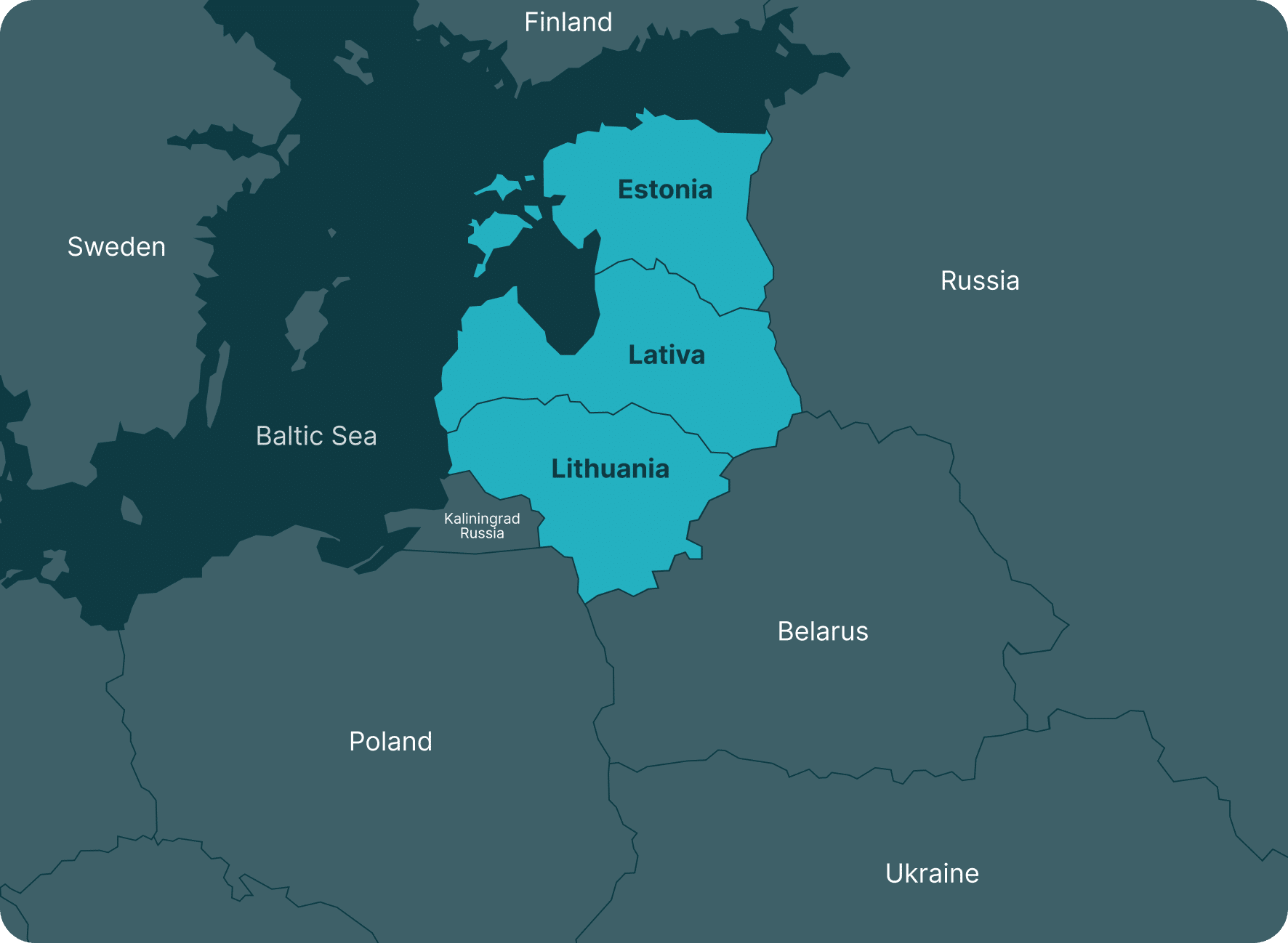
The Baltic states remain particularly vulnerable because of their proximity to Russia and Belarus, limited strategic depth and dense urban concentration. Recent incidents, including civilian sheltering in Vilnius and the interception of a drone by a NATO fighter jet over Estonia, have heightened public concern and reinforced perceptions that existing air-defence systems could face significant pressure during the early stages of a regional escalation. In response, Baltic governments are increasingly seeking Ukrainian expertise in shelter construction, drone defence, and civilian resilience. Ukraine’s experience of sustained missile and drone attacks since 2022 is now serving as a practical model for strengthening preparedness along NATO’s eastern flank.
The incidents also carry important political and economic implications. Drone incursions have already contributed to domestic instability, particularly in Latvia, where controversy surrounding Ukrainian drones entering Latvian territory contributed to the collapse of the governing coalition.
At the European level, these developments are accelerating discussions on joint procurement, integrated air-defence systems and EU financing mechanisms for security infrastructure. Simultaneously, Moscow is likely exploiting such incidents to test NATO cohesion, amplify disinformation narratives and increase political pressure on governments supporting Ukraine.
Implications for business travellers
For business travellers, the implications can be significant. The increasing frequency of drone-related airspace alerts and electronic warfare disruptions could lead to sudden flight delays, diversions, airport closures and broader transport disruptions across northern and eastern Europe. Travellers transiting through airports previously affected by drone incidents, particularly in Scandinavia and the Baltic region, may encounter enhanced security procedures, longer waiting times and operational interruptions implemented with limited warning.
The recent disruptions in Lithuania further demonstrate that drone-related incidents can affect rail networks and domestic transport systems in addition to aviation infrastructure. Airlines and rail operators are also likely to reroute services or adjust schedules during periods of heightened alert, increasing the risk of missed connections and logistical disruption for corporate travel. While the direct threat to civilians remains limited, the unpredictability of these incidents will complicate business mobility and reinforce the need for flexible itineraries, contingency planning and short-notice management by corporate travel and security teams.
Political and economic implications for Europe
The incidents expose a broader European resilience gap, as airports, rail networks, logistics hubs and energy infrastructure remain insufficiently prepared for persistent drone and electronic warfare threats. The war in Ukraine has demonstrated that resilience depends on rapid detection, coordination and adaptive crisis management rather than solely on regulatory compliance. As drone technologies become cheaper and more accessible, the divide between civilian and military security will continue to narrow, reinforcing European efforts to strengthen defence coordination and strategic autonomy within NATO structures.
Further drone incursions and electronic warfare incidents across northern and eastern Europe remain highly likely. NATO and EU member states are expected to strengthen counter-drone systems, surveillance capabilities and civil-defence infrastructure. In contrast, Baltic states deepen cooperation with Ukraine on preparedness and electronic warfare mitigation. However, continued hybrid operations will likely increase regional tensions and the risk of miscalculation between NATO and Russia.