
With contributions from Claudia Gualdi and Lorena Peña
As borders tighten and global dynamics shift, alliances between countries can change rapidly, putting travellers at risk of getting caught in diplomatic crossfire. We often associate travel disruptions with visible events like winter storms, air traffic control failures or drone activity near airports. However, many disruptions begin long before a flight is scheduled. Visa policy changes, often driven by evolving political tensions, can have immediate and tangible impacts on travellers, sometimes with little warning or clarity.
What is visa reciprocity?
At its core, visa reciprocity refers to the idea that states should offer each other’s citizens equivalent treatment when it comes to entry requirements. If one country waives visa requirements, the other is expected to respond in kind. However, the introduction of mutual visa benefits is not a common practice among countries. Officials increasingly treat visas as a key diplomatic tool, used to reward allies, penalise rivals or respond to migration, politics or security issues
Recent changes affecting travellers in 2025
- On 10 April 2025, Brazil reinstated an E-visa requirement for citizens of the United States, Canada and Australia. This reverses the visa waiver introduced in 2019 under Bolsonaro and aligns with Brazil’s policy of reciprocity, treating visitors the same way Brazilians are treated abroad.
- On 16 July 2025, Azerbaijan and China officially implemented a mutual visa-free arrangement for holders of ordinary passports, based on a reciprocal agreement. Citizens of both countries can now enter, exit or transit through each other’s territory without a visa for stays of up to 30 days per visit. The total stay cannot exceed 90 days within any 180-day period.
- On 8 July 2025, the U.S. announced updates to its reciprocal non-immigrant visas for Nigerians. Existing visas remain unchanged. However, visas issued after the date are single-entry and valid for three months. The update follows ongoing global security and reciprocity reviews. The U.S. continues to work with Nigeria to meet visa standards and strengthen bilateral ties. Nigeria did not update its visa policy on U.S. nationals as a countermeasure, but defined the decision as disproportionate and misaligned with reciprocity principles, equity and mutual respect between the two nations.
- In July 2025, Argentina allowed Dominican citizens with a valid U.S. tourist visa to enter the country for tourism purposes without obtaining an Argentine visa or an Electronic Travel Authorisation (AVE). The new rule aims to boost tourism and takes into consideration the principle of reciprocity, as the Dominican Republic already allows visa-free entry to Argentinians.
Travellers paying the price of foreign policy
Visa reciprocity is no longer just a technicality. It’s a moving part of international relations. Visa policies are becoming even more dynamic, particularly in regions experiencing elections, migration pressures or geopolitical shifts. Yet many travellers underestimate the impact that visa policy changes and updates in visa reciprocity agreements might have on travel plans.
Even short-term policy changes can lead to:
- costly delays in obtaining visas or documentation.
- missed commercial opportunities due to sudden entry restrictions.
- an erosion of traveller confidence, especially for less-experienced or high-risk travellers
How Riskline helps travellers stay ahead
At Riskline, we provide clients with up-to-date, granular visa intelligence. Our visa alerts flag changes as they happen, offering context and clarity on:
- changes and why
- nationalities affected
- how it connects to broader travel risk factors
 From quiet policies to major impacts
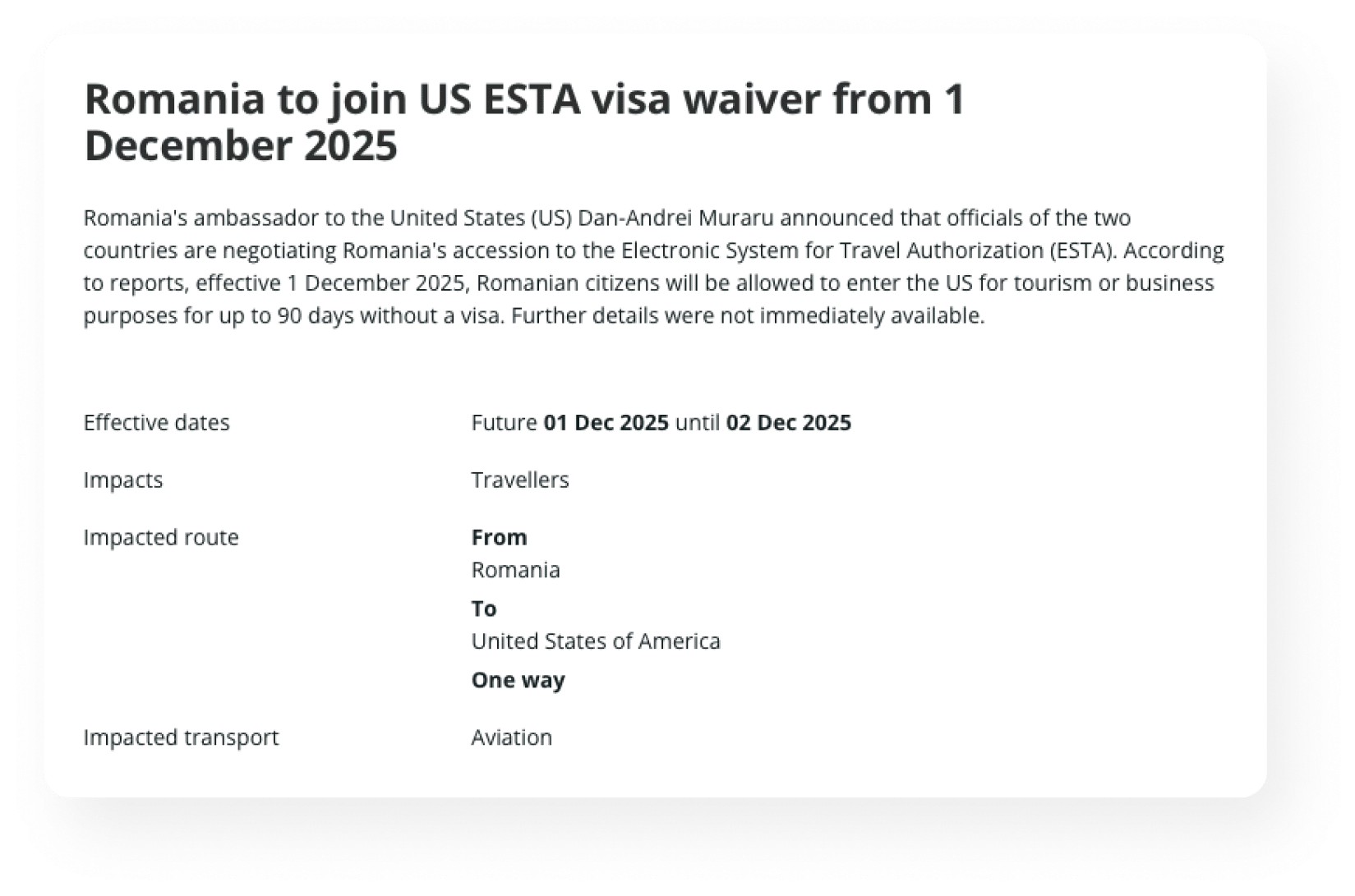 From quiet policies to major impacts
Visa reciprocity is emerging as one of the most significant yet underappreciated forces shaping international travel. Shifting political alliances and diplomatic tensions increasingly dictate who can cross borders. These factors now outweigh traditional influences like seasonal patterns or tourism flows.
Visa policy is increasingly acting as a transactional currency. It often reflects the state of bilateral relations and serves as a bargaining chip or sanction tool. For governments, businesses and travellers, this creates a far more complex and fluid landscape to navigate. Monitoring and understanding the geopolitical dynamics behind visa regimes has become an essential part of global mobility strategy.