




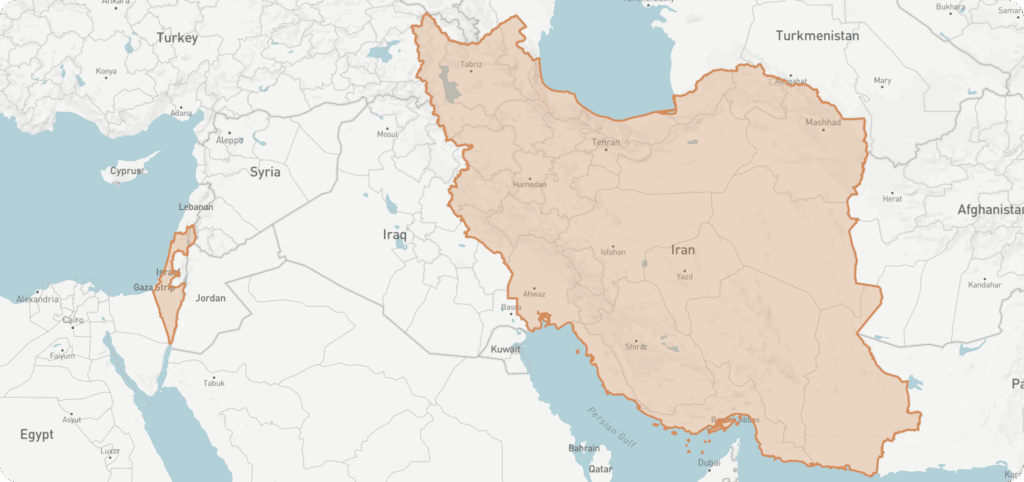
Conflict between Iran and Israel

Iran-Israel conflict

In June, Israel launched Operation Rising Lion, targeting Iranian military and nuclear sites, prompting swift Iranian retaliation. The US joined the campaign on 22 June, conducting airstrikes on Iranian nuclear facilities. A ceasefire was announced on 24 June. Although it remains in effect as of December, concerns persist over potential breaches and renewed conflict. Iran is now pursuing both limited retaliation against Israel and prolonged engagement with international organisations while rebuilding its capabilities. Both countries face risks of regional destabilisation. Iran also suspended cooperation with the IAEA but reached a tentative agreement for renewed inspections in September. Israel has lifted domestic restrictions, operating under full readiness amid the ongoing fragile ceasefire.

What to Expect: 

Ceasefire violations between Iran and Israel remain possible, with a risk of renewed direct conflict and potential US involvement. Israeli airstrikes have targeted multiple Iranian military and nuclear sites across numerous cities, while Iran has launched drone and missile attacks on Israeli military, nuclear and civilian infrastructure, damaging hundreds of buildings in urban areas. Threats from regional pro-Iran proxies operating along Israel’s borders and to maritime traffic in the Strait of Hormuz remain likely. Cyber operations have escalated, with Israeli attacks on Iran’s financial and communications networks and Iran restricting online platforms, affecting civilian access. There is also a risk of violent government-backed protests in Iran and other Middle Eastern countries against Western diplomatic and commercial interests, leading to embassy staff withdrawals.

Travel

Impact on Travel:

  • Airspace Restrictions: Israeli airspace reopened on 24 June; Iranian airspace fully reopened on 3 August.
  • Flight Disruptions: Some airlines, including Lufthansa Group, Etihad, United Airlines, LOT Polish and Tarom, have resumed flights; others like Air Baltic and Ryanair continue suspensions. Airports may close with little notice due to ongoing tensions.
  • Travel Disruptions: Extended airstrikes could halt or heavily restrict intercity travel. Energy infrastructure may be targeted, causing fuel shortages and blackouts. Israel Railways resumed services on 19 June after SoE restrictions were lifted.
  • Travel Authorisations: Flight rerouting may create uncertainty with transit visas. Checkpoints and enhanced identity screening  are active in Kurdistan, Khuzestan, West Azerbaijan, Tehran, Kermanshah, Isfahan, Fars and Lorestan, as part of a nationwide crackdown on alleged Israeli spies. To date, over 1,000 people have been detained.

Advice:

  • Reconsider travel to Iran and Israel in the near term amid the ongoing ceasefire.
  • Stay updated on the evolving situation and notify your embassy of travel plans; review evacuation procedures.
  • Prepare for sudden changes to travel restrictions or security measures; have contingency plans.
  • Exercise caution near embassies, consulates and foreign-owned businesses, particularly Western entities.
  • Avoid demonstrations due to risk of unrest.
  • In case of airstrikes, seek shelter in reinforced or hardened facilities.
  • Anticipate potential internet and communications disruptions; secure offline access to key information and contacts.

Disclaimer

This is a summary of our Advisories. The full version provides a detailed analysis, additional insights and the context for each incident. You can view a sample here.

Request a demo to see our Advisories in action.

Destinations Impacted 

Iran, Israel

Risk Levels

Safe, with few security risks. Travel disruptions: travel is possible with an expectation of routine disruptions and delays.

Generally safe, with some predictable security risks. Travel disruptions: travel is possible with an expectation of routine disruptions and delays.
Not completely safe, but typically presents predictable security risks. Travel disruptions: travel is possible, but there is a potential for disruptions.
Can be dangerous and may present unexpected security risks. Travel disruptions: travel is possible, but there is a potential for severe or widespread disruptions.
Extremely dangerous and presents unpredictable security risks. Travel disruptions: chaotic; travel impossible.

Destination Research

Destination risk, safety & travel reports

Travel Search

Visa, health, safety & documentation

TripReady

Pre-travel security & travel safety advisories

Realtime Alerts

Breaking on-site travel risk updates 24/7

Visa Check Beta Tool

Instant, accurate visa rules for 220+ countries

Travel and Tech Data

Data to improve user satisfaction

Technology Solutions

APIs, widgets and portal

The Informer

Articles, news and product updates

Newsroom

The latest developments at Riskline

Resources

In-depth content on relevant topics

Download the PDF