




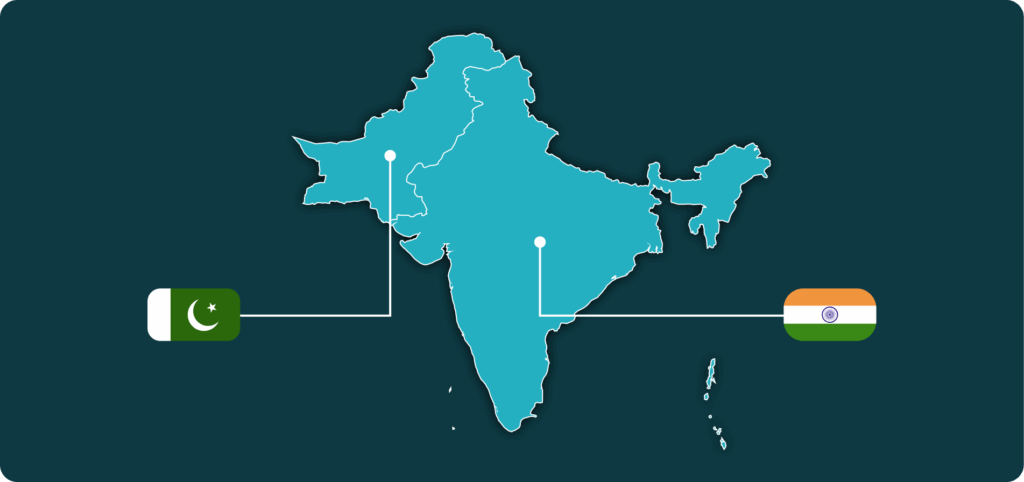
India-Pakistan military tensions after Pahalgam terror attack

India–Pakistan border tensions

Tensions between India and Pakistan escalated sharply in early May following a terror attack in Pahalgam, Jammu and Kashmir, that killed at least 28 Indian tourists. The attack, claimed by the Pakistan-based The Resistance Front (TRF), sparked outrage across India and led to a diplomatic fallout, including the suspension of the Indus Water Treaty, visa cancellations and reduced diplomatic presence on both sides. Between late April and early May, both countries engaged in intense cross-border clashes along the Line of Control (LoC), involving missile and drone strikes with dozens of casualties.

A US-brokered ceasefire took effect on 10 May. While tensions remained high, the ceasefire has largely been held as both sides entered negotiations.

What to Expect:

Renewed cross-border clashes along the India–Pakistan border, particularly in Jammu and Kashmir, Azad Kashmir and Punjab, could lead to further travel restrictions, evacuations and communication blackouts. Travellers faced tightened security, including strict identity checks and extended processing times at borders.

Travel

Impact on Travel:

Between April and July, travel between India and Pakistan was severely disrupted. Both countries closed their airspace, causing flight cancellations at major airports such as Karachi (KHI/OPKC), Lahore (LHE/OPLA), Islamabad (ISB/OPIS) and Sialkot (SKT/OPST). These closures will remain in place through at least the end of December.

Land borders, including Attari–Wagah, Suchetgarh and Chamliyal, remained closed, with tight security measures in border regions and tourist site closures. Both sides also suspended visa exemptions and short-term visa services, forcing most Pakistani nationals in India to leave, while only Sikh pilgrims were exempt.

Advice:

  • Exercise caution during travel to both India and Pakistan, particularly to the Kashmir region, due to the potential for resumption of military action.
  • Travellers should maintain contact with travel managers and/or embassy staff, and review evacuation plans in the event of an escalation of tensions.
  • Ensure that identification documents are in order and carry a copy of your passport and visa at all times.  
  • Follow all official directives. Seek shelter in response to warning sirens. Avoid large gatherings or demonstrations. 

Disclaimer

This is a summary of our Advisories. The full version provides a detailed analysis, additional insights and the context for each incident. You can view a sample here.

Request a demo to see our Advisories in action.

Destinations Impacted 

India, Pakistan

Risk Levels

Safe, with few security risks. Travel disruptions: travel is possible with an expectation of routine disruptions and delays.

Generally safe, with some predictable security risks. Travel disruptions: travel is possible with an expectation of routine disruptions and delays.
Not completely safe, but typically presents predictable security risks. Travel disruptions: travel is possible, but there is a potential for disruptions.
Can be dangerous and may present unexpected security risks. Travel disruptions: travel is possible, but there is a potential for severe or widespread disruptions.
Extremely dangerous and presents unpredictable security risks. Travel disruptions: chaotic; travel impossible.

Destination Research

Destination risk, safety & travel reports

Travel Search

Visa, health, safety & documentation

TripReady

Pre-travel security & travel safety advisories

Realtime Alerts

Breaking on-site travel risk updates 24/7

Visa Check Beta Tool

Instant, accurate visa rules for 220+ countries

Travel and Tech Data

Data to improve user satisfaction

Technology Solutions

APIs, widgets and portal

The Informer

Articles, news and product updates

Newsroom

The latest developments at Riskline

Resources

In-depth content on relevant topics

Download the PDF