




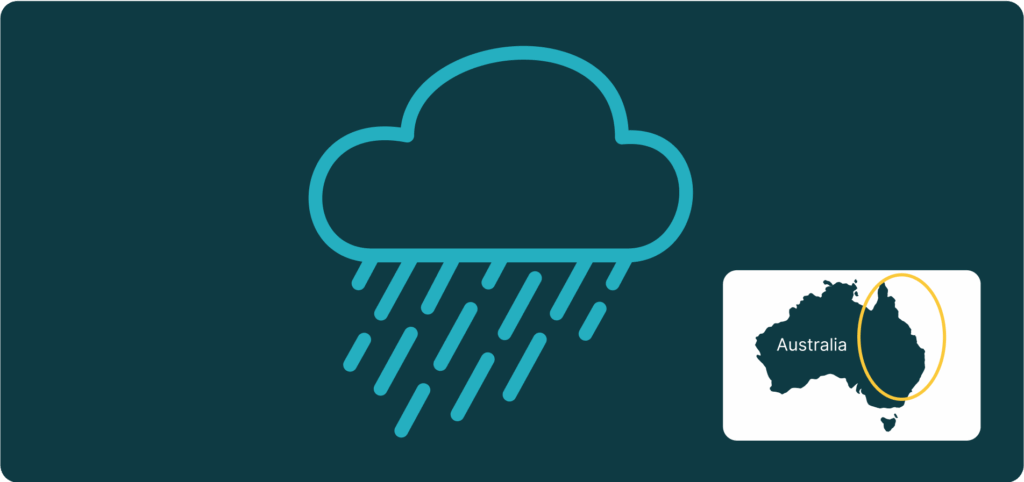
Australia: Disruptions from heavy rainfall in parts of Queensland and NSW

Queensland and NSW floods

Between early March and the end of April, heavy rain and severe flooding hit parts of Queensland (QLD) and New South Wales (NSW). Ex-Tropical Cyclone (TC) Alfred struck Moreton Bay Island near Brisbane on 8 March and dissipated in central QLD a few days later. Multiple low-pressure systems worsened the impact, affecting around four million people. Life-threatening floods disrupted travel and services in towns and cities near rivers and water bodies. The worst-hit areas included Brisbane, Gold Coast and Townsville in QLD, and Grafton, Tweeds Heads, Lismore and Byron Bay in northern NSW.

What to Expect:

Weather officials continued to warn of heavy rainfall and flash flooding in QLD’s central and western areas including areas in and around Thargomindah, Eulo and Cunnamulla, due to remnants of Tropical Cyclone (TC) Dianne. Flood warnings were in effect for multiple rivers and creeks including Bulloo, Georgina, Lower Warrego, Langlo, Paroo, Thomson and Barcoo rivers, and Eyre and Cooper. Rain showers were also expected across much of Queensland. Rain and flooding eased by the end of April.
Travel

Impact on Travel:

Floods blocked roads, bridges and essential services. Power outages hit many communities. Authorities evacuated dozens of people from low-lying areas of Thargomindah in late March. Damaging surf hit Stockton Beach, Newcastle, Sydney, Wollongong, Batemans Bay, Moruya Heads and Eden. Floods made roads impassable and disrupted businesses, ferry services and rail transport in Townsville, Thargomindah, Eulo, Cunnamulla and Wanaaring.

Advice:

  • Follow local alerts and evacuation instructions in the event of future flooding.
  • Stay indoors if not in a mandatory evacuation zone.
  • Secure documents and essentials; avoid low-lying areas and floodwaters.
  • Confirm travel routes and contact booking agents for updates.
  • Watch for landslides, weakened structures and opportunistic crime.
  • Maintain food safety, hygiene and water sanitation.
  • Take precautions against melioidosis (contact with soil/water) and mosquito-borne diseases (use repellents).

Disclaimer

This is a summary of our Advisories. The full version provides a detailed analysis, additional insights and the context for each incident. You can view a sample here.

Request a demo to see our Advisories in action.

Destinations Impacted 

New South Wales and Queensland

Risk Levels

Safe, with few security risks. Travel disruptions: travel is possible with an expectation of routine disruptions and delays.

Generally safe, with some predictable security risks. Travel disruptions: travel is possible with an expectation of routine disruptions and delays.
Not completely safe, but typically presents predictable security risks. Travel disruptions: travel is possible, but there is a potential for disruptions.
Can be dangerous and may present unexpected security risks. Travel disruptions: travel is possible, but there is a potential for severe or widespread disruptions.
Extremely dangerous and presents unpredictable security risks. Travel disruptions: chaotic; travel impossible.

Destination Research

Destination risk, safety & travel reports

Travel Search

Visa, health, safety & documentation

TripReady

Pre-travel security & travel safety advisories

Realtime Alerts

Breaking on-site travel risk updates 24/7

Visa Check Beta Tool

Instant, accurate visa rules for 220+ countries

Travel and Tech Data

Data to improve user satisfaction

Technology Solutions

APIs, widgets and portal

The Informer

Articles, news and product updates

Newsroom

The latest developments at Riskline

Resources

In-depth content on relevant topics

Download the PDF