Travel

In recent years, rising sea temperatures and shifting weather patterns have increased the frequency and intensity of tropical storms globally. While the Atlantic and Pacific Oceans have long been prone to such events, other areas such as Central Europe, the Mediterranean Sea and the Middle East are now facing them more frequently.

From Europe to sub-Saharan Africa, the Americas to Asia-Pacific, each region encounters distinct challenges. In Europe, storms frequently result in flooding and travel chaos, while the Mediterranean has seen a rise in powerful hurricanes. Africa and the Middle East remain at high risk from destructive weather, and the Americas endure particularly intense hurricane seasons. Meanwhile, the Asia-Pacific region experiences some of the most severe typhoons recorded.

As these storms become more frequent and unpredictable, their impact on travel grows, including flight cancellations, road closures and power outages. Preparedness and flexibility are crucial for travellers visiting high-risk areas.

EURO

While tropical hurricanes rarely impact Europe directly, warming seas and shifting weather patterns are increasing their presence and contributing to more intense and unpredictable storms. Since 2000, the remnants of approximately 30 hurricanes have reached the continent, usually weakening into tropical storms upon arrival. 

The region experienced intense activity between 2024 and 2025, with Central and Northern Europe hit by devastating storms, such as:


These events caused widespread infrastructure damage and transport disruptions. They originate from high-pressure systems from the Atlantic moving inland, bringing intense rainfall and strong winds that cause catastrophic flooding. Affected countries include Austria, Germany, Portugal, France, Hungary, Poland, Romania, Slovakia, the Czech Republic, Slovakia, United Kingdom and Ireland, where travel chaos lasted for days, paralysing major airports and international travel hubs. 

Meanwhile, countries like Albania, Malta, Spain, Greece, North Macedonia, Bulgaria, Italy and Türkiye are occasionally impacted by medicanes, intense tropical-like cyclones that form over the Mediterranean Sea. A DANA (high-altitude, cut-off low-pressure storm system) hit Southeastern Spain in October 2024 with catastrophic rainfall that affected the Valencian Community, Castilla-La Mancha and Andalusia, among other areas, with the deadliest floods in decades. In the European Union alone, over the past 30 years, floods have impacted 5.5 million people, causing 3,000 fatalities and over EUR170 billion in economic losses.


Glossary:

DANA – High-altitude, cut-off low-pressure storm system

Medicanes – Mediterranean hurricanes


By Claudia Gualdi, Roxana Dumitrescu and Sila Ceyhan

N/A

Sub-Saharan Africa is highly vulnerable to tropical cyclones, which develop in the Indian Ocean and frequently impact East Africa, with the cyclone season typically running from November to April. 

In recent months, the region faced severe tropical cyclone activity, with Cyclones Chido and Dikeledi causing widespread destruction. In December 2024, Chido became one of the strongest storms to hit the region in decades, devastating Mayotte before making landfall in Mozambique. The storm caused over 120 fatalities in Mozambique, affecting more than 380,147 people across Nampula, Niassa and Cabo Delgado provinces, including Pemba, while also damaging critical infrastructure. In Mayotte, at least 39 people died and large parts of the island were left in ruins. Malawi also faced severe flooding, which claimed 13 lives across the Southern and Central regions. Additionally, the storm impacted northern Madagascar and Agaléga island in Mauritius. Chido was one of the costliest cyclones in the basin, with insured losses in Mayotte exceeding USD675 million. 

In January 2025, Cyclone Dikeledi followed, striking northern Madagascar, Mayotte and later Mozambique’s Nampula province, where at least 11 fatalities were recorded. The cyclone exacerbated destruction in areas still recovering from Chido, causing further damage and straining humanitarian stocks. More recently, in mid-March, Storm Jude displaced thousands, blocked roads and caused widespread damage and power outages across Madagascar and Malawi, as well as Mozambique, where at least 14 lives were lost.


By Claudia Gualdi, Roxana Dumitrescu and Sila Ceyhan
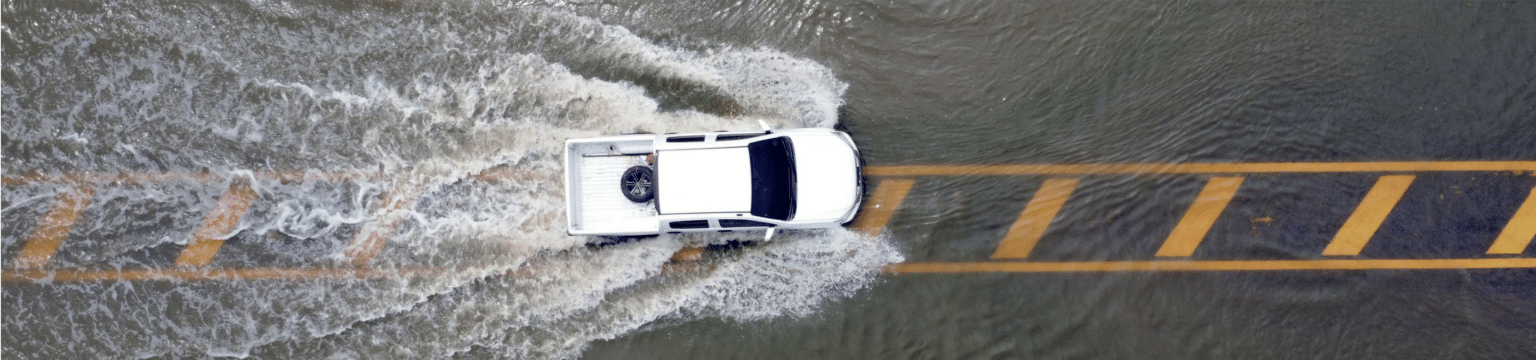
Cyclones and medicanes, though historically rare in the Middle East and North Africa, have become increasingly frequent in recent years, presenting growing risks and exposing the region’s weakness in dealing with extreme weather events. MENA’s arid climate is not typically associated with such storms; however, climate change and rising sea surface temperatures have heightened the likelihood of tropical cyclones forming in the Arabian Sea and Red Sea, affecting Somalia, Iran, Oman, Yemen, Bahrain, Qatar, Saudi Arabia and the United Arab Emirates (UAE). Medicanes in the Mediterranean Sea have in recent years impacted Algeria, Tunisia and Libya. 

In 2021, Cyclone Shaheen made landfall in Oman, near Muscat, generating massive storm surges along the coast, causing extensive damage and at least 14 fatalities. In 2023, Cyclone Tej became one of the strongest storms recorded in the Arabian Sea, bringing heavy rainfall and flooding to Yemen and the Socotra Archipelago. The storm caused massive damage to infrastructure and communication networks. That same year, Medicane Daniel caused devastating flooding across eastern Libya, particularly in Derna, with thousands of fatalities and more than 43,000 people displaced following two dam failures. 

The UAE also experienced its heaviest rainfall in April 2024, leading to widespread flooding that disrupted services, impacted flights at Dubai International Airport (DXB/OMDB) and submerged major highways. In Oman, 21 people lost their lives in flash floods caused by similar downpours. Despite efforts to improve early warning systems and disaster response strategies, the region remains largely unprepared for such weather events. Inadequate drainage systems in cities such as Dubai and Jeddah in Saudi Arabia further exacerbate flood risks. 

As weather events become less predictable and global warming increases the frequency and intensity of cyclones, mitigating risks associated with extreme weather events in the MENA region is becoming increasingly critical.


Glossary:

Medicanes – Mediterranean hurricanes


By Claudia Gualdi, Roxana Dumitrescu and Sila Ceyhan

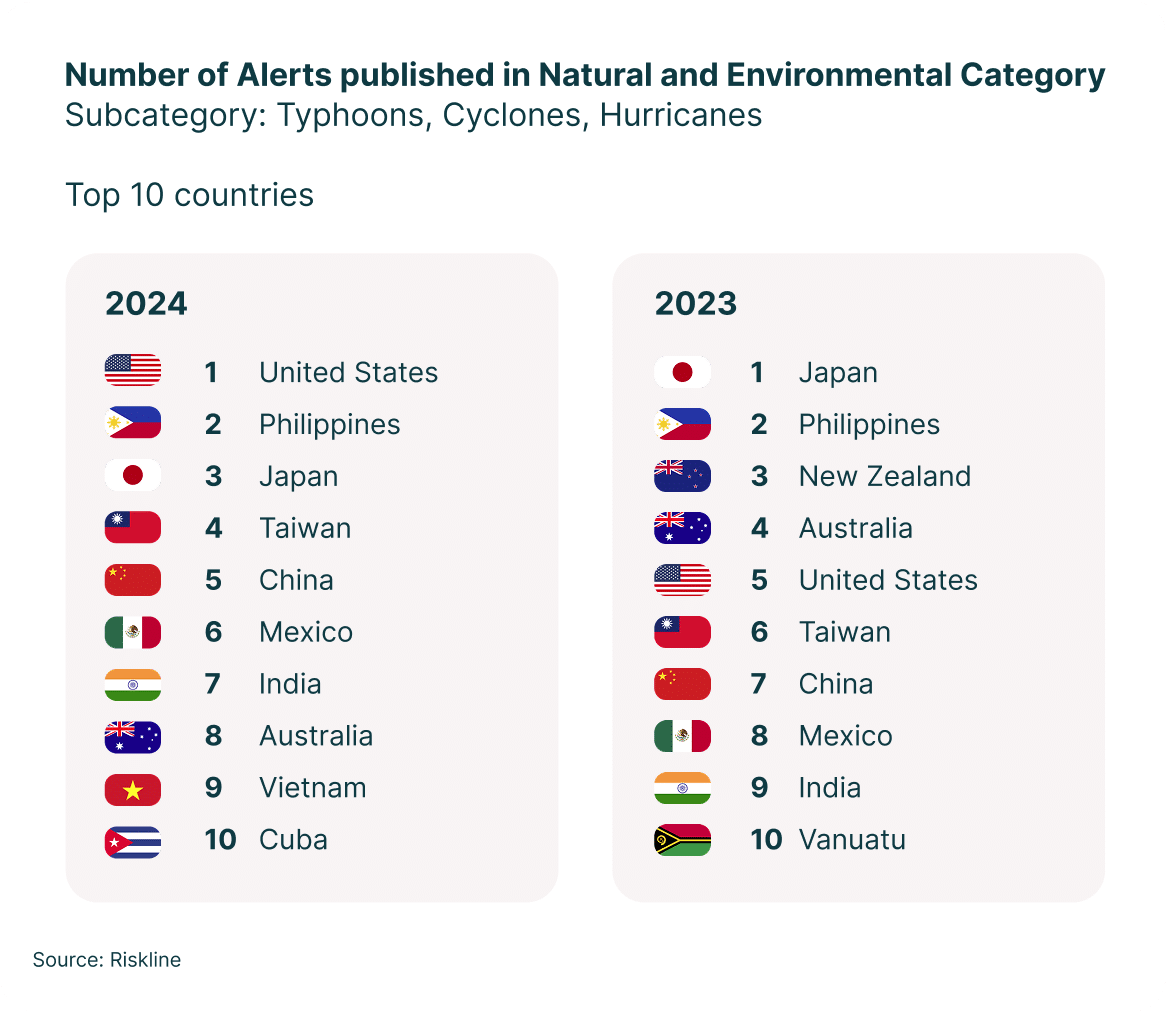
Typhoons are tropical cyclones that occur in the West or North-West Pacific Ocean, affecting South-East and East Asian countries. This region experiences the highest number of tropical cyclones worldwide. The Philippines, Vietnam, Japan, Taiwan, Hong Kong, Macau and China are particularly at risk of being affected by frequent typhoons. Typhoons may affect these countries from May to November, with the peak season being July and September. 

With an average of 20 typhoons per year, the Philippines is the country most affected by tropical cyclones in the world. Due to the effects of climate change, it experienced an unprecedented onslaught of six consecutive typhoons within just 30 days between late October and mid-November 2024. Among the six typhoons, two were categorised as Super Typhoons, with wind speeds of over 185kph.

The cyclone season in Australia generally lasts from 1 November to 30 April. An average of 11 cyclones occur in the region annually, although only four or five of these reach the mainland. The 2024-25 cyclone season in the Australian region saw a series of strong cyclones hit the Australian coast. The most powerful was Tropical Cyclone Zelia, which strengthened to a Category 5 on 13 February. Cyclone Alfred caused severe damage to South-East Queensland and New South Wales North Coast. The most notable impact was beach erosion, but economic damage is estimated to be in the billions of dollars. A similar scenario occurs in the South Pacific countries of Tuvalu, Samoa, Fiji, Tonga and Vanuatu, which experience an average of six cyclones per year. 

Cyclones in the North Indian Ocean typically form between December and April, peaking from May to early November. The northern Indian Ocean is divided into two sub-basins: the Bay of Bengal and the Arabian Sea. The countries most affected by these areas are India, Pakistan, Bangladesh, Sri Lanka and Myanmar. It has produced some of the deadliest cyclones in the world, as they affect very densely populated areas. The last cyclone of the 2024 season was Cyclone Fengal, causing significant flooding in southern India and Sri Lanka, killing at least 37 people.


By Farhan Rafi and Lorenzo Trevisan

One of the areas most impacted by hurricanes and tropical storms in the world is the AMER region. 

The Atlantic Ocean, Caribbean and Gulf of Mexico are the zones where tropical storms and hurricanes mostly form and make landfall during the Atlantic hurricane season, which lasts from June 1 to November 30 and peaks around September. The 2024 season was deemed to be ‘above average activity’ as 18 storms were named in the Atlantic basin, compared to the 14 typically predicted in an average season. In contrast, the eastern Pacific hurricane season, which lasts from May 15 to November 30, affects Mexico and parts of Central America.

The US Gulf Coast states of Florida, Texas, Louisiana, Mississippi and Alabama are particularly vulnerable to tropical storms due to their location facing the Gulf of Mexico. These states are followed by the Outer Banks, Mid-Atlantic and New England regions in terms of exposure. In 2024, the United States was devastated by Hurricanes Milton and Helen

Mexico and Central America face a double threat due to their geography. Hurricanes and tropical storms have frequently struck both the Atlantic and Pacific Ocean coasts. In 2024, Hurricane John brought devastating torrential rainfall to Mexico’s Oaxaca and Guerrero states, with Acapulco and Puerto Escondido suffering major infrastructure damage.

The Caribbean Sea is especially vulnerable as the climatological conditions in the area easily spark the formation of the storms, making the region seven times more likely to be struck by natural disasters than larger states and twice as likely as other small states.  Among the countries highly exposed to tropical storms are the Dominican Republic, Haiti, St Kitts and Nevis, Antigua and Barbuda, Jamaica, Barbados, Cuba, St Lucia, Saint Vincent, Dominica and the Bahamas. As the earliest Atlantic basin Category-5 hurricane ever recorded, Hurricane Beryl formed in July 2024 and caused widespread devastation across the region, primarily striking the southern Windward Islands.


By Lorena Peña

Impact on Travel

Hurricanes, cyclones and storms significantly disrupt travel plans. Power outages, strong winds and heavy rainfall can cause flight cancellations or delays, with major airports and international hubs grounding flights for multiple consecutive days. Road, rail and maritime transport may also be shut down with communications rendered inoperable.

Extreme weather events’ impact varies from temporary disruptions to services to long-term infrastructure damage and economic losses.

Evacuations are often necessary when storms or cyclones cause significant damage. When authorities do not call for evacuations, they may still impose movement restrictions in the affected areas to prevent the potential for looting, chaos or other crimes. Regardless of the severity of these measures, they can significantly affect travellers’ plans, especially if they remain in place long-term.

In locations with less resilient infrastructure than others, travel destinations may face long recovery periods. Damaged hotels, transport networks, businesses and tourist attractions may take weeks or months to rebuild, with relative consequences on local economies and tourism revenue. Sometimes, these effects are further prolonged by negative media coverage, which contributes to increased safety concerns even after the disaster.

Travel Advice

Stay updated

Follow reliable sources, including government advisories, weather agencies and local news outlets. Early warning systems are commonly used in all locations. If you receive advisories from civil protection, follow all official directives.

Contact booking agents, hotels, car hire companies and other travel providers to find out about cancellations or changes to travel plans due to extreme weather conditions.

Buy travel insurance, as several contingencies could impact your travel plans, especially if heading to areas notoriously affected by extreme weather disasters. Some packages offer full coverage for the trip, while others provide refunds and compensation only for trip delays or interruption, or credits and vouchers for future travel.

If a hurricane or cyclone approaches, threatening your accommodation during the trip, stay indoors and seek shelter. Secure the room by reinforcing windows and doors with shutters and clear outdoor areas to avoid objects that could cause damage.

Plan a direct route that leads you away from the path of the storm. Monitor changes in wind speed and direction. If authorities order an evacuation, leave immediately and follow all directives.

These events can last for several consecutive days. Consider alternative routes in case roads or airports are closed or flights are cancelled by authorities.

During these emergencies, communication networks may be saturated. In extended blackouts, updates from local authorities can be accessed through mobile data or battery-powered devices. Depending on the severity of the damage, utility companies may take several days to restore power.

Multiple cyclones could strike in succession, leaving you stranded for days or weeks. Remote islands are typically connected with ferries or sea vessels, which are most likely out of service during adverse weather.

With an average of 20 typhoons per year, the Philippines is the country most affected by tropical cyclones in the world. Due to climate change, it experienced an unprecedented onslaught of six consecutive typhoons within just 30 days between late October and mid-November 2024. Among the six typhoons, two were categorised as Super Typhoons, with wind speeds of over 185kph.

Contributors:

Claudia Gualdi, Farhan Rafi, Lorena Peña, Lorenzo Trevisan, Roxana Dumitrescu and Sila Ceyhan
Editor:

Paul Mutter, Global Coverage Manager at Riskline

Share

Destination Research

Destination risk, safety & travel reports

Travel Search

Visa, health, safety & documentation

TripReady

Pre-travel security & travel safety advisories

Realtime Alerts

Breaking on-site travel risk updates 24/7

Visa Check Beta Tool

Instant, accurate visa rules for 220+ countries

Travel and Tech Data

Data to improve user satisfaction

Technology Solutions

APIs, widgets and portal

The Informer

Articles, news and product updates

Newsroom

The latest developments at Riskline

Resources

In-depth content on relevant topics

Download the PDF