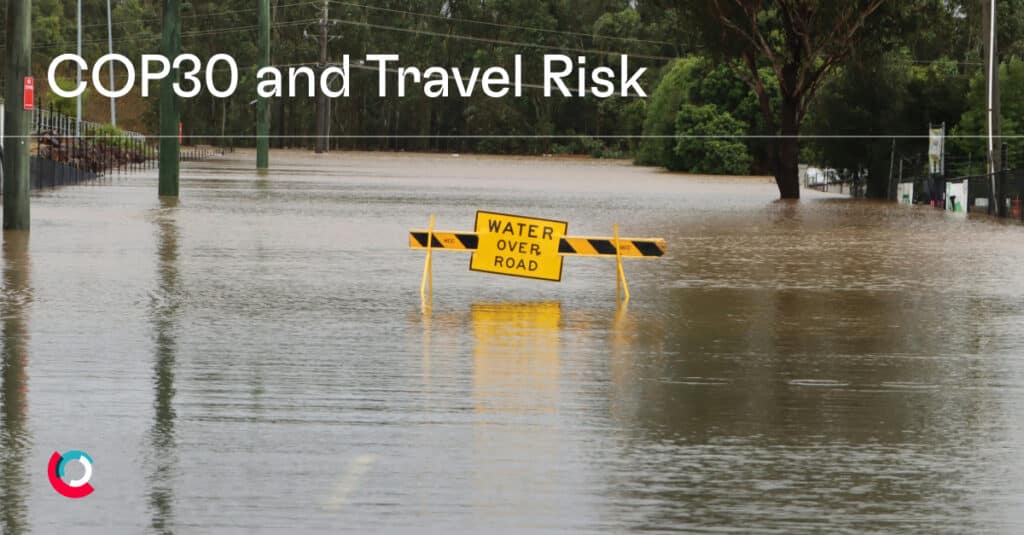
In the wake of the United Nations’ climate conference, travel insurers face mounting pressure to recalibrate risk models as climate volatility reshapes global mobility and traveller safety
The COP30 climate summit in Brazil closed with a clear message for the travel insurance sector: climate change is already disrupting global mobility, and risk managers must adapt fast. Extreme weather, health pressures, and population displacement are combining to create a new, more complex travel-risk landscape.
Riskline says this shift is already visible in its daily intelligence work. The travel data and analysis company reports a 37% rise in natural and environmental alerts this year, driven by “intensified heatwaves, wildfires, hurricane and typhoon seasons” worldwide.
Health and migration risks intensify
COP30 discussions underscored how climate stress is reshaping both migration and public health. The World Health Organization warned that sudden-onset weather events displaced over 20 million people in 2023, with projections of more than 216 million internal climate migrants by 2050. For travel insurers, this means reassessing exposure in destinations where strained healthcare systems, disrupted transport, and reduced access to care may heighten both traveller vulnerability and claims severity.
Travel managers, meanwhile, are urged to look beyond “traditional security and visa checks” and evaluate whether local medical infrastructure can withstand climate-driven surges in demand.
Tourism as part of the solution
Tourism featured prominently at COP30, with governments and industry showcasing how the sector can support sustainability across “energy, biodiversity, food systems, finance and human development”. Riskline notes that travel managers can play a role by prioritising responsible suppliers, while insurers have an opportunity to incentivise low-carbon choices and provide robust cover for weather-related disruption.
Early-warning systems and finance reshape risk exposure
The summit reinforced the importance of real-time early-warning systems for storms, floods, heatwaves, and wildfires. Such tools allow insurers to anticipate claims, adjust coverage and help clients avoid loss events, while enabling travel teams to “reroute, delay or adjust” itineraries proactively.
Climate-finance flows are also becoming a key indicator of destination resilience. Regions benefiting from infrastructure and preparedness investment present lower long-term risk; those without may face escalating losses.
Riskline says it now blends “human expertise, artificial intelligence (AI) speed and wide-ranging open-source intelligence” to support climate-aware travel risk management, offering early-warning alerts, destination profiling, and sustainability-aligned intelligence.
Its message post-COP30 is unequivocal: climate resilience is now central to protecting travellers – and to the future sustainability of travel insurance itself.
Read the article in ITIJ.